Comfort books by Japanese authors

I certainly chose a fantastic time to leave California and head back to Montreal, didn’t I? The weather in this entire half of the continent is certainly something else right now. I am so thankful I work from home these days, and that my folks are retired and don’t have to leave the house in this disaster.
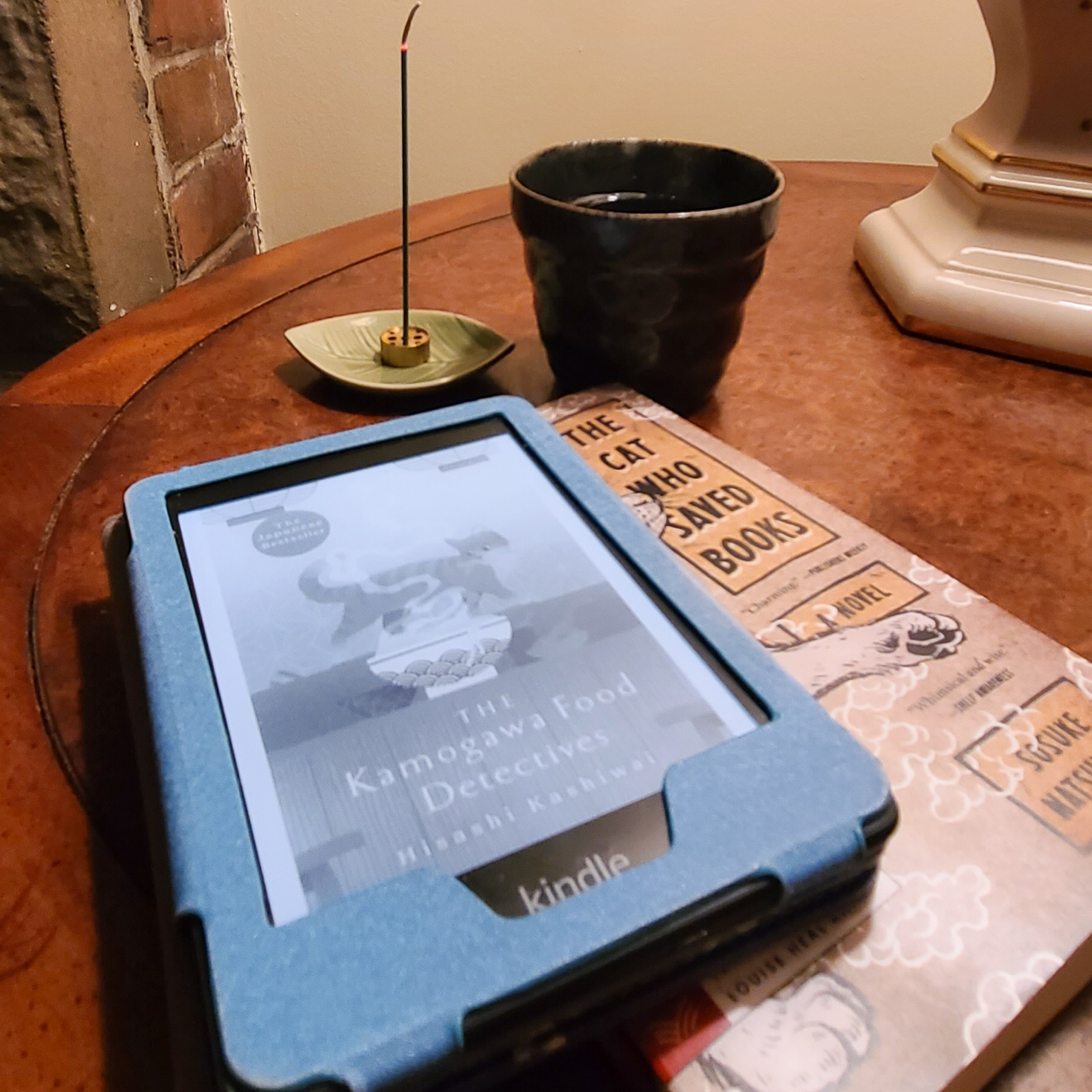
That being said; what better time to curl up with a fantastic book and a warm cup of genmaicha and let your mind drift to a different country, a different climate, a different time, a different world? I’ve been meaning to start doing fiction book reviews here to go along with the more kimono-specific non-fiction, and it looks like the universe just gave me the nudge I needed.

This first post will include a couple of novellas and shorter novels all in one entry, and if you enjoy it I will work on writing longer ones about individual books in the future! I also don’t want to give too much away, as these should all be read somewhat “blind” to truly appreciate them.

As always links to purchase the books, where available, will be included. And if you’re wondering why I’ve used stock images for the covers, it’s that several of the physical copies for these stayed behind in California and the rest are on my e-reader.

The Samurai’s Garden, by Gail Tsukiyama
Okay, right off the bat, parts of this book are definitely less relaxing than others. Set against a backdrop of tuberculosis, racial tension, and a dawning war, this is the story of Stephen, a young Chinese man sent to rest and recuperate on his family’s property in Japan on the cusp of WWII.

Without giving too much away, he forms a bond with the gardener and learns so much more than just gardening. The stories of past and present both unfold and open up slowly but steadily, much like Stephen himself.

This one is a classic for a reason, and if you have not had the opportunity to read it (or anything else by Gail Tsukiyama), now is the time. It should also be mentioned that Tsukiyama is American of Japanese descent and this is the only book on the list that was written originally in English.

Read The Samurai’s Garden on Amazon | Abebooks | Kobo


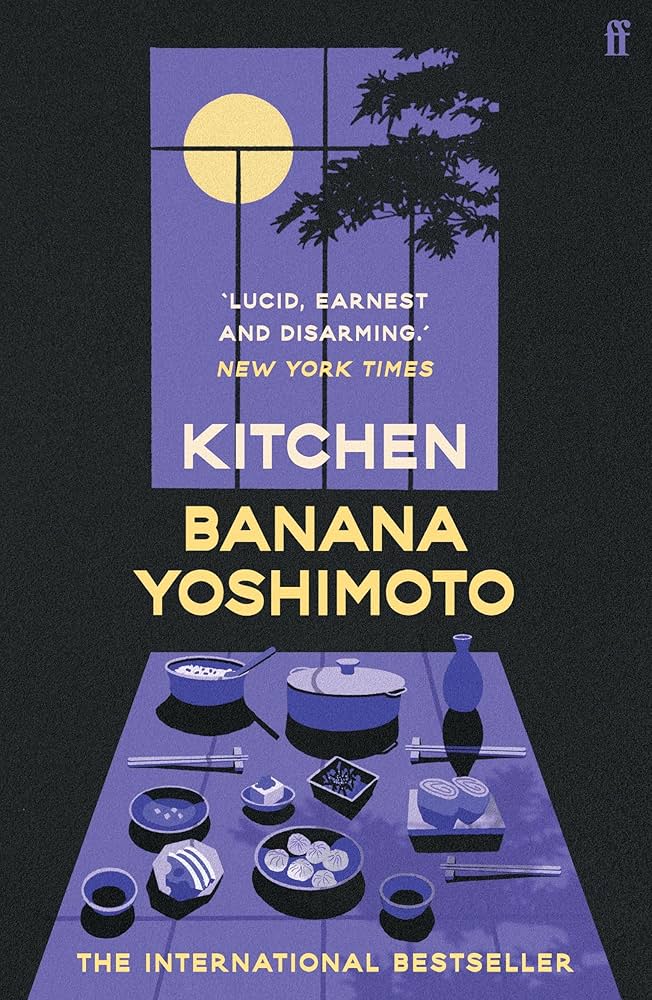
Kitchen, by Banana Yoshimoto

What do love, loss, food, and gender expression have in common? They’re all things that are very important to me, and they all play roles in this next book.

I cannot express how much I love Kitchen. I’m a fan of all of Yoshimoto’s work but this little diamond in particular will always have a special place in my heart. So much so that I’ve replaced two physical copies and am on my third, and I have a digital copy as a backup. I picked up my first copy in the early nineties and have utterly lost track of how many times I’ve re-read it since then. Yes, I’m old. Shush.

The book is typically printed as two novellas, the longer eponymous one and a shorter one entitled Moonlight Shadow. Both are stories of people learning to cope with a new status quo after losing loved ones and both contain secondary characters who, to different extents, have begun experimenting with gender presentation or cross-dressing as coping mechanisms. Kitchen focuses much more on the role of food as ersatz therapy, but Moonlight Shadow also has a tea thermos play a pivotal role. At their hearts though, they’re both about beautifully imperfect people learning how to move forward after painful losses.

Including stories that revolve around death may be an interesting choice for “cozy” books, but it’s handled with such a gentle, soothing touch and hopeful notes  in both cases that it’s an incredibly cathartic and comforting read. Especially if you’re dealing with similar feelings in your own personal life.

Amazon | Abebooks | Kobo


The Cat Who Saved Books, by Sosuke Natsukawa

Did I initially pick up The Cat Who Saved Books because I suspected the cover art was by one of my favourite artists, Yuko Shimizu (no, not she of Hello Kitty fame – the other, cooler Yuko Shimizu)? Yes. Yes I did. Was I correct about the cover art? Also yes. Have I read it several times since then because I love it so much? A third, resounding yes.

This is one of the coziest books I’ve read recently, and is often cited as an emblematic example of iyashikei, 癒し系 or “healing” literature. In the past few extraordinarily stressful decades, iyashikei has emerged as its own subset of Japanese media, primarily anime and manga but extending to fiction and live-action.

The Cat Who Saved Books falls into the genre of magical realism and fantasy, so if that’s not your bag you might want to skip it. But if you love books, and if a nerdy teenager and his talking cat who run through mazes and puzzles to save forgotten books from irresponsible owners sounds appealing to you, read on! Rintaro Natsuki inherits a bookshop from his grandfather and is initially going to close the shop, until Tiger the shop cat starts talking to him. They set off on adventure together to protect the written word. This book is, well, a love letter to books.

There is also a sequel, The Cat Who Saved The Library, which I have not had the chance to pick up yet but it’s also on my list! I would also love to see this made into an anime or movie.

Amazon | Abebooks | Kobo


The Kamogawa Food Detectives, by Hisashi Kashiwai
What if someone could recreate a dish from your memory, one that could transport you back to a place, a person, or a time long since past? Set in a little restaurant off the beaten path in Kyoto, this is the story of a father and daughter who help heal people in small doses, one bite at a time. More like a series of interconnected stories, each one focusing on a specific guest, recipe, and memory. This also makes it great bedtime reading, as you don’t feel compelled to stay up all night to finish the book, when you can finish one part at a time.

The Kamogawa Food Detectives will make you feel wistful, happy, peaceful, and incredibly hungry all at once.

This is the first book in a trilogy, and the other two books are very near to the top of my reading pile. While I can only speak for the first one, I have linked to the other two below as well.

The Kamogawa Food Detectives on Amazon | Abebooks | Kobo
The Restaurant of Lost Recipes on Amazon | Abebooks | Kobo
Menu of Happiness on Amazon | Abebooks | Kobo


I hope if you decide to read any of the above books, I hope you find them as lovely and soul-enriching as I did. I have more similar books to read soon, including What You Are Looking For Is in the Library by Michiko Aoyama, The Convenience Store by the Sea by Sonoko Machida, and Days at the Morisaki Bookshop by Satoshi Yagisawa. If you have any other suggestions of other cozy books I should read and review, or any other novels to check out, let me know in the comments!

 I purchased this item myself and chose to review it.This post contains affiliate link(s). If you choose to purchase, I receive a small rebate or commission which goes to the continued maintenance of this site. 
A pop of sentiment

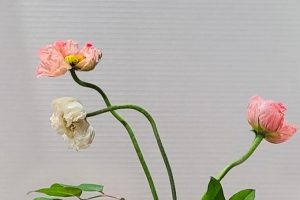
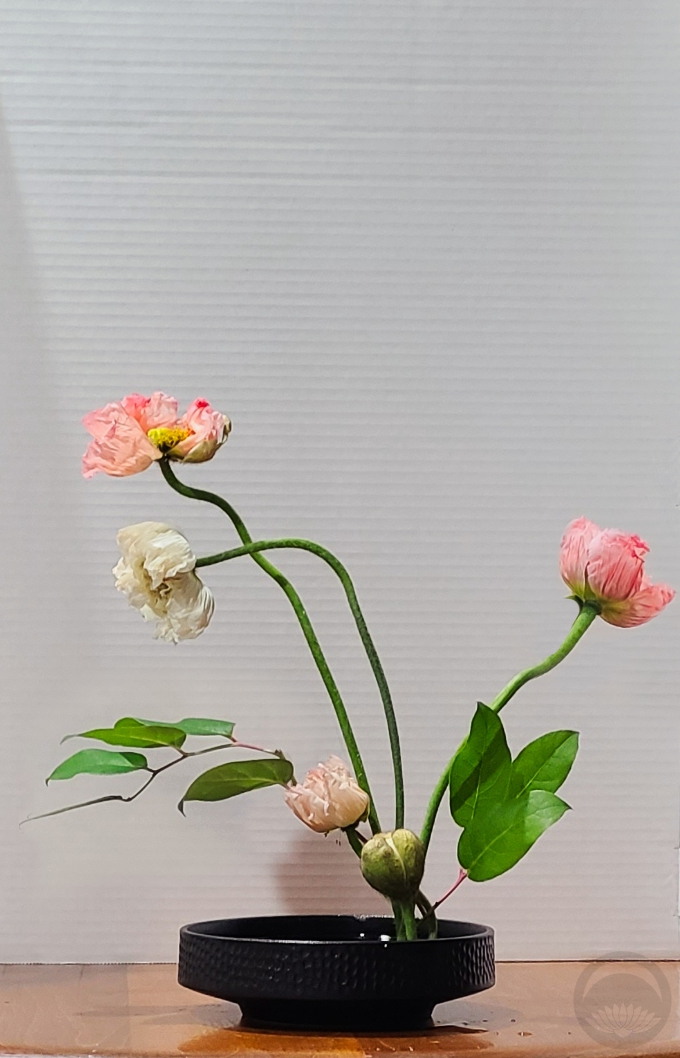
Isn’t it funny how cyclical life can be? The last kitsuke coordination I did before leaving Montreal last time involved poppies, and now the last ikebana I’ve done before leaving California involved poppies.

Last weekend, Keith and I were in Palm Springs (doing an escape room – unrelated but super fun!) and I figured while were there we’d check out one of the local florists. I was running under the assumption they’d have more variety than the supermarket near home and typically I’d be right but they’d done a big event that morning and were running low on stock. I found this bundle of pink and white poppies in various levels of bloom and decided I could do something neat with them once I let the buds open up a bit.

Unfortunately, the following day I learnt the very important lesson of Don’t Put Your Hand In The Blender While It’s Plugged In. Thankfully I only pulsed one finger for a fraction of a second, and while there’s a fair bit of gnarly tissue damage it could have been so much worse. But I couldn’t exactly use my hand, or even hold the scissors I needed to cut the stems. I was worried they’d wilt before I had the chance to feature them.

So imagine my surprise when a beautiful set of proper wide-handled ikebana shears showed up in the mail on Tuesday, courtesy of my lovely friend Andrea.

I decided to just let the flowers shine, featuring them at different heights and different levels of open. I love the contrast, and how sculptural the stems are. A bit of foliage to balance things out, and the arrangement essentially put itself together. I could not be happier with it!

Mini Washitsu 2026

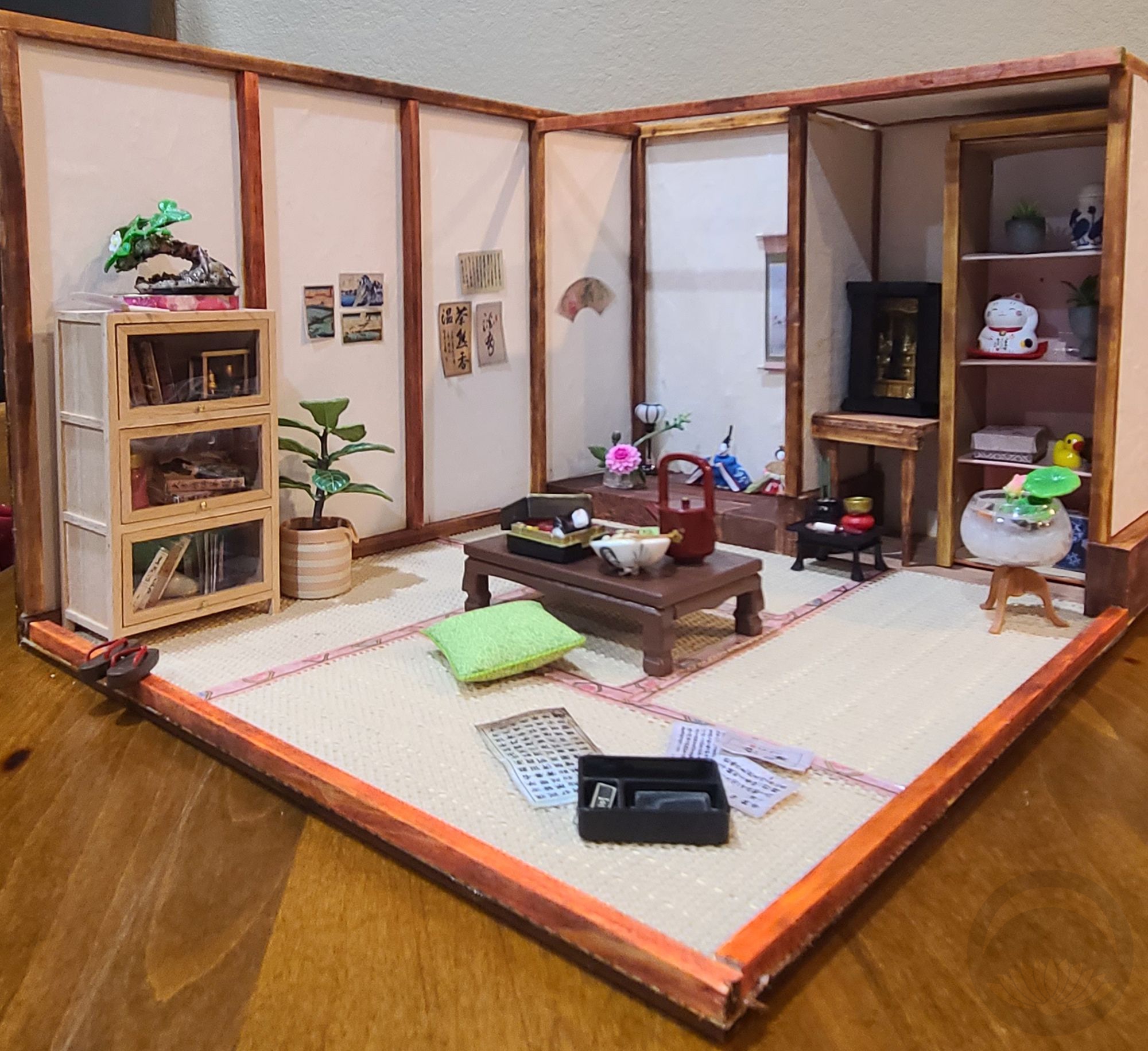
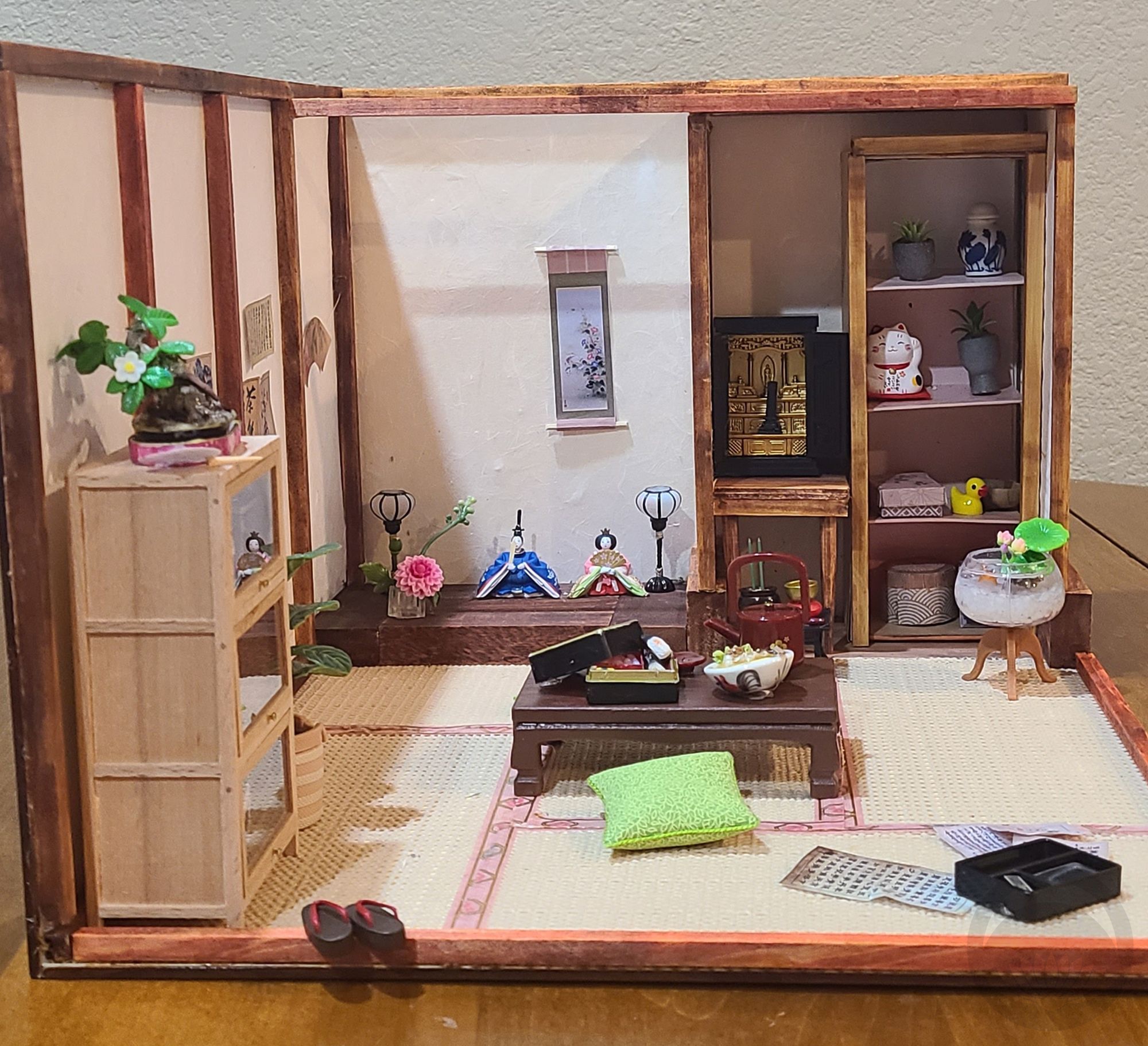
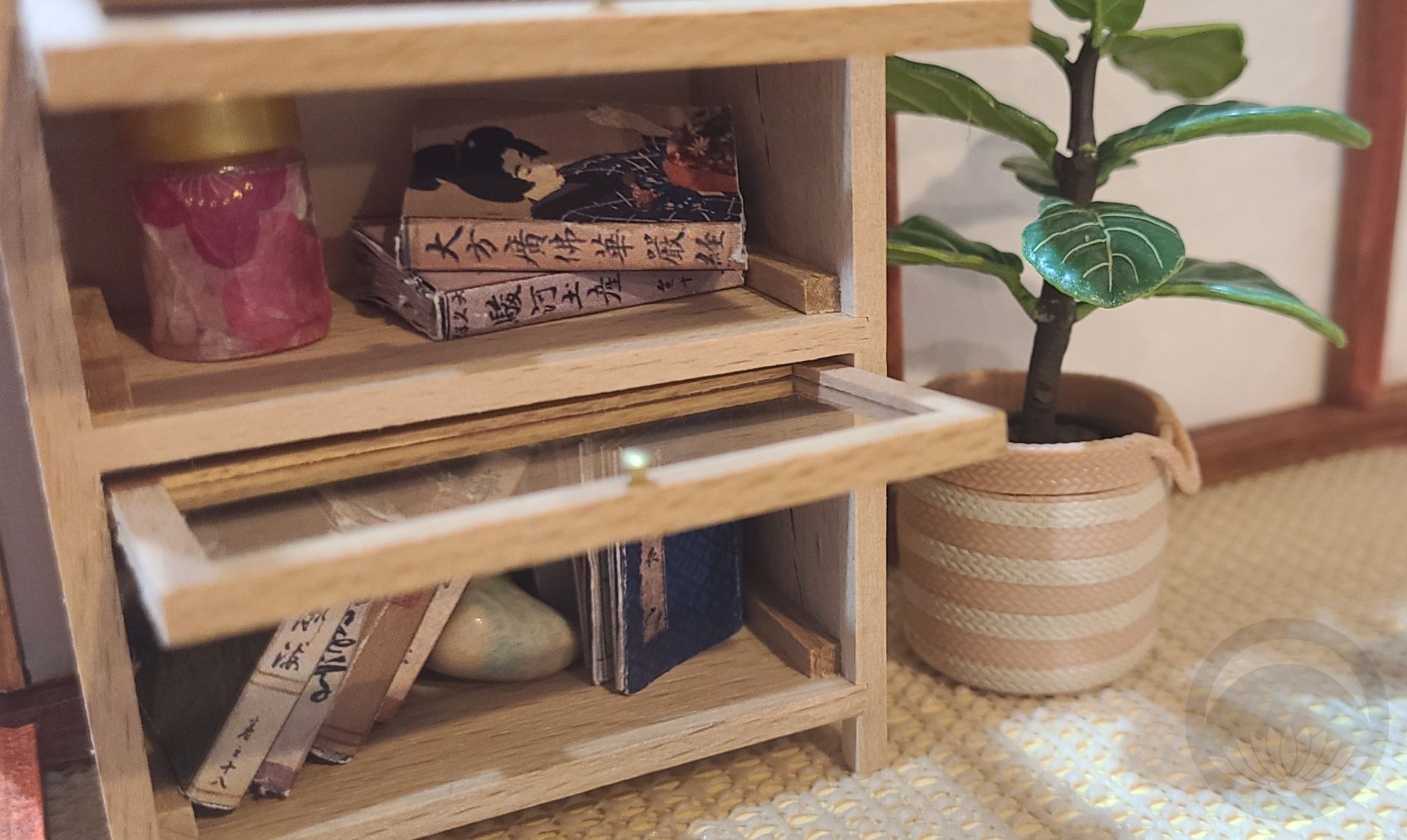
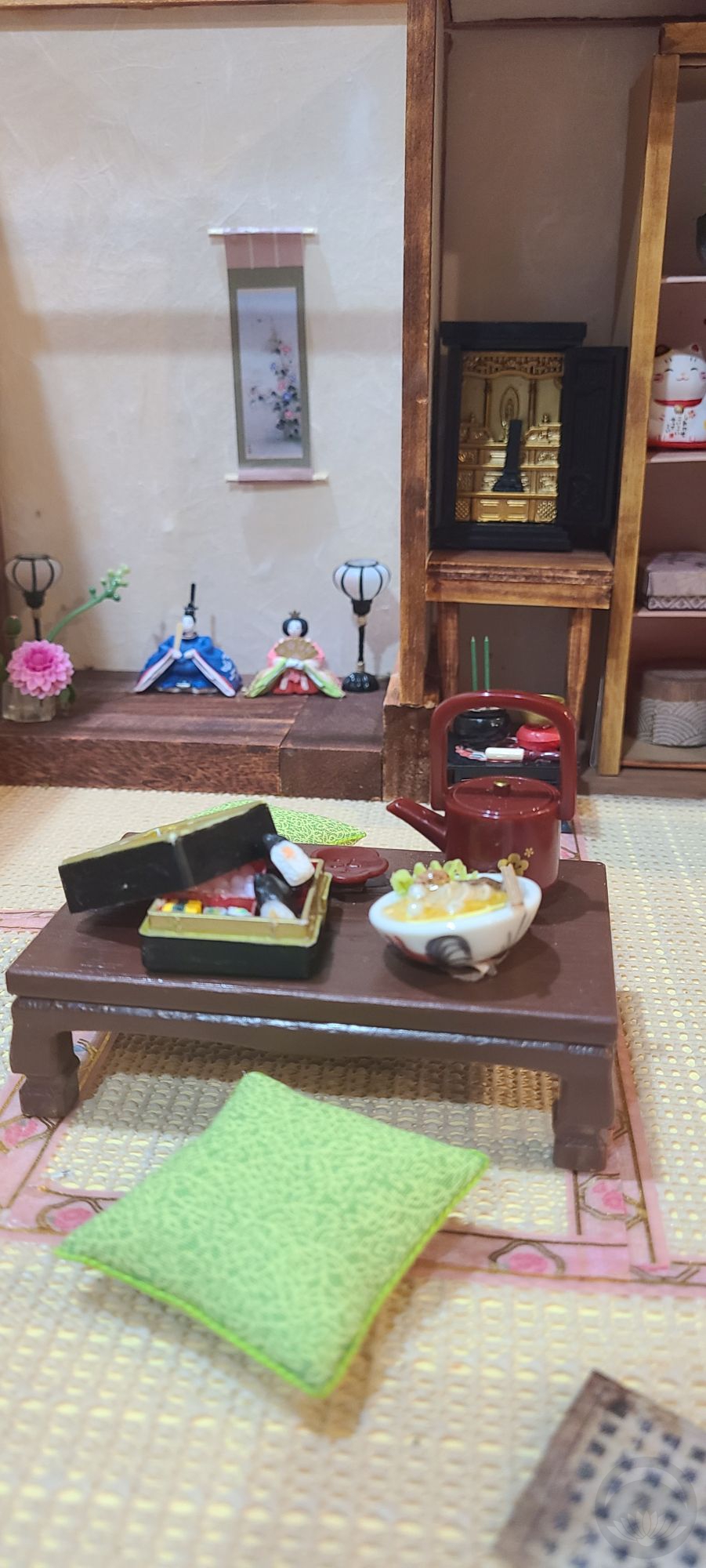
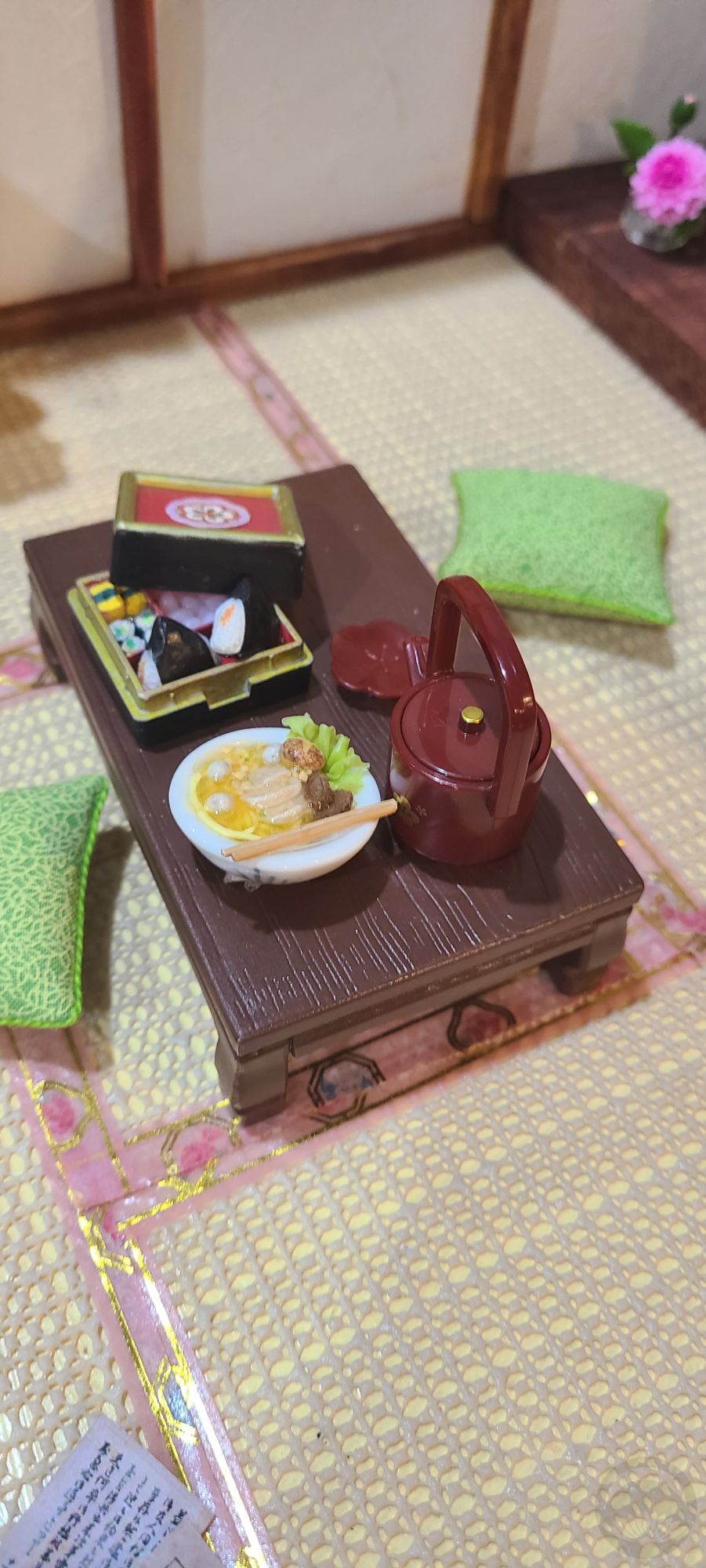
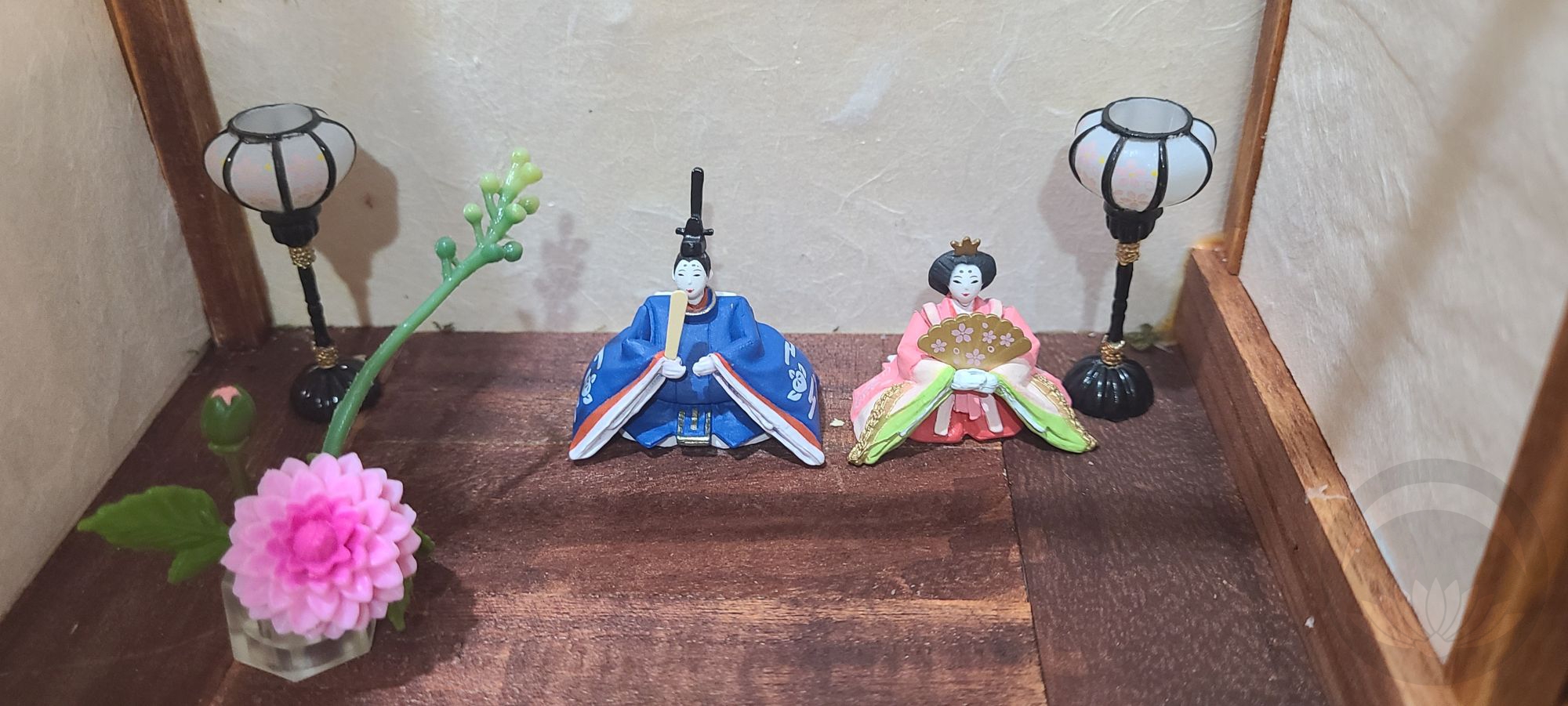
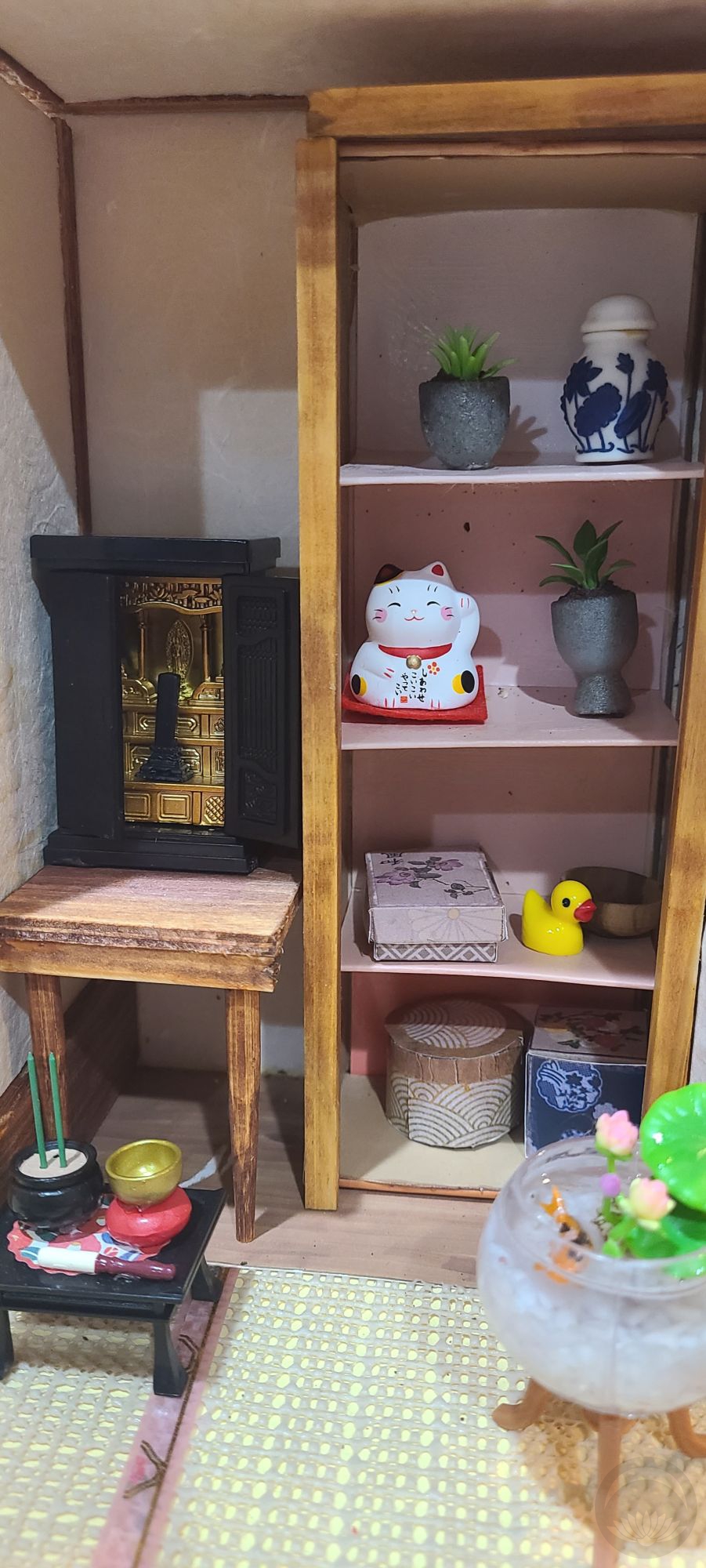
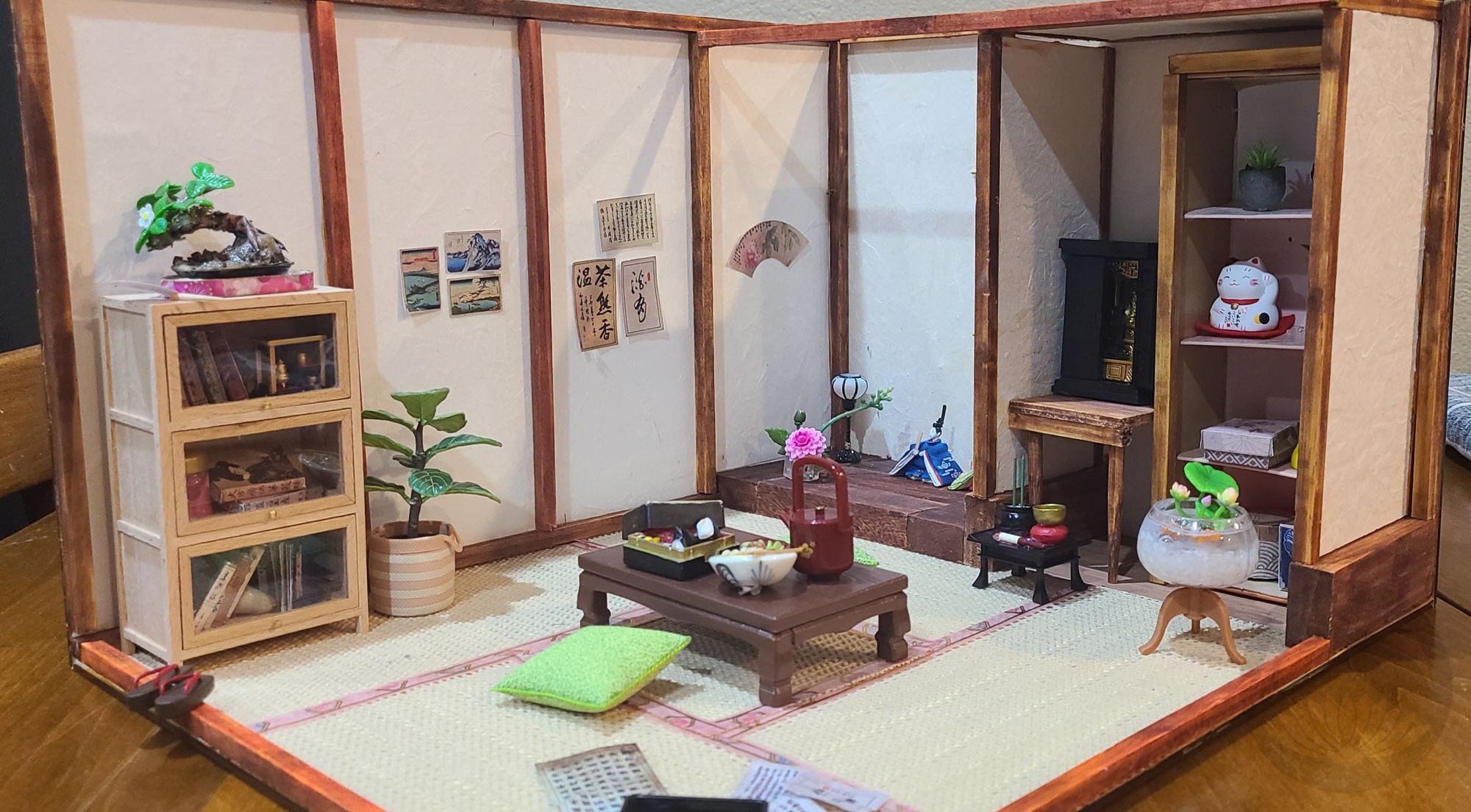
I am no stranger to making Japanese-inspired dioramas (see here and here), but until this time they’ve not been particularly accurate. The first one was assembled from literal junk including a cardboard box, and the second was a kitbash into an “inspired” home. But I was itching to do something a bit more detailed, proportional, and accurate than my previous attempts, so I hauled some of my miniature supplies from Montreal to California and got to work.

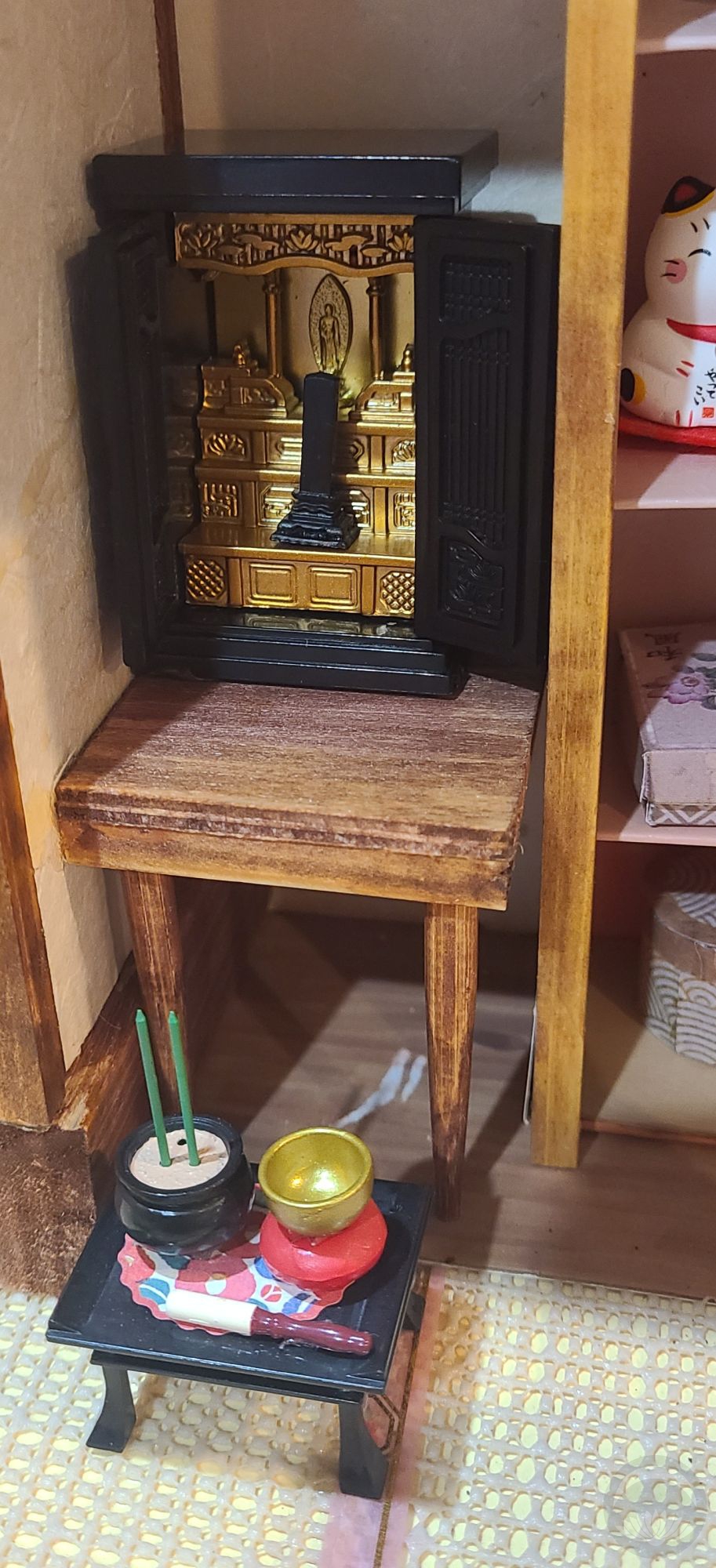
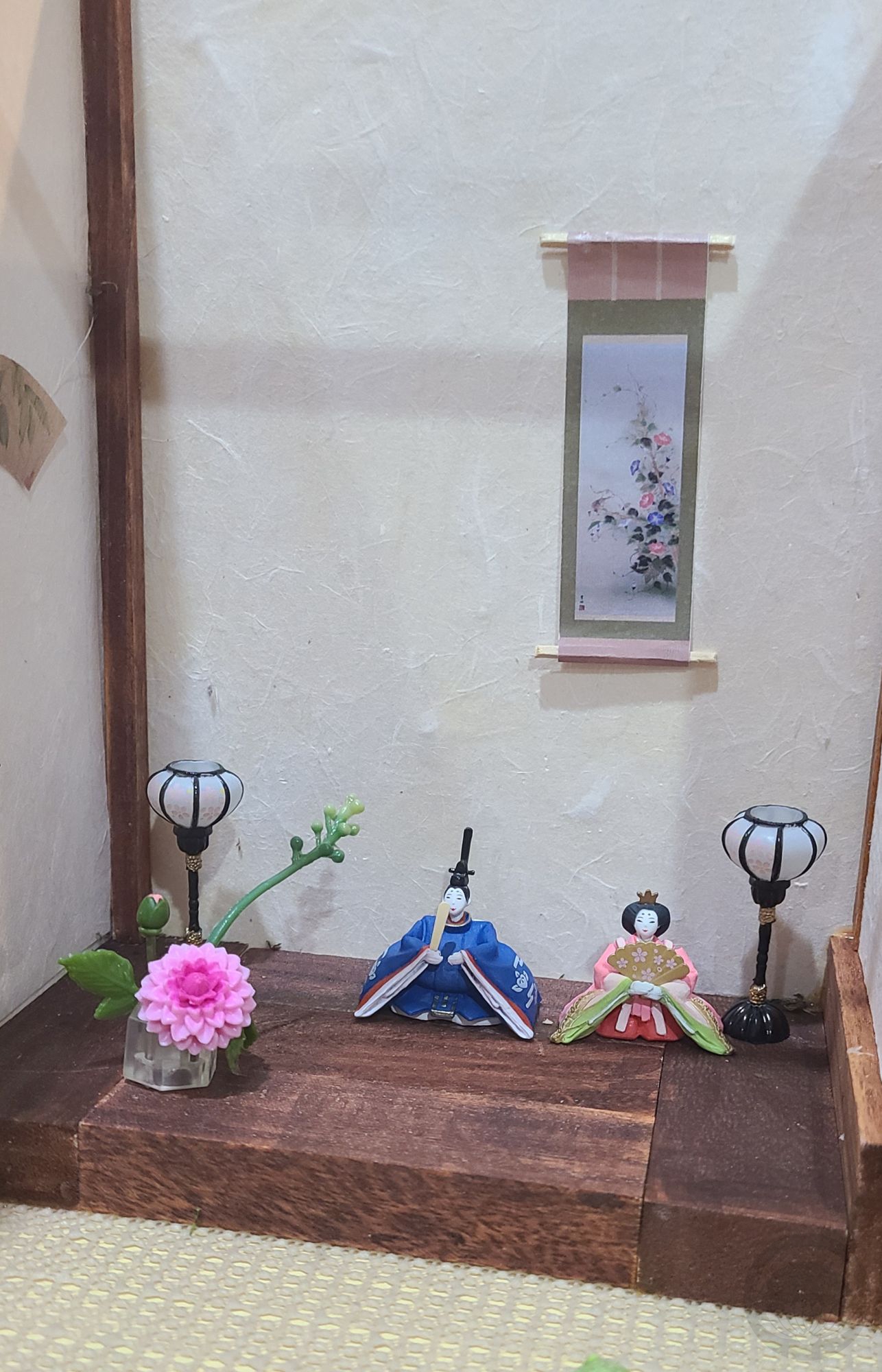
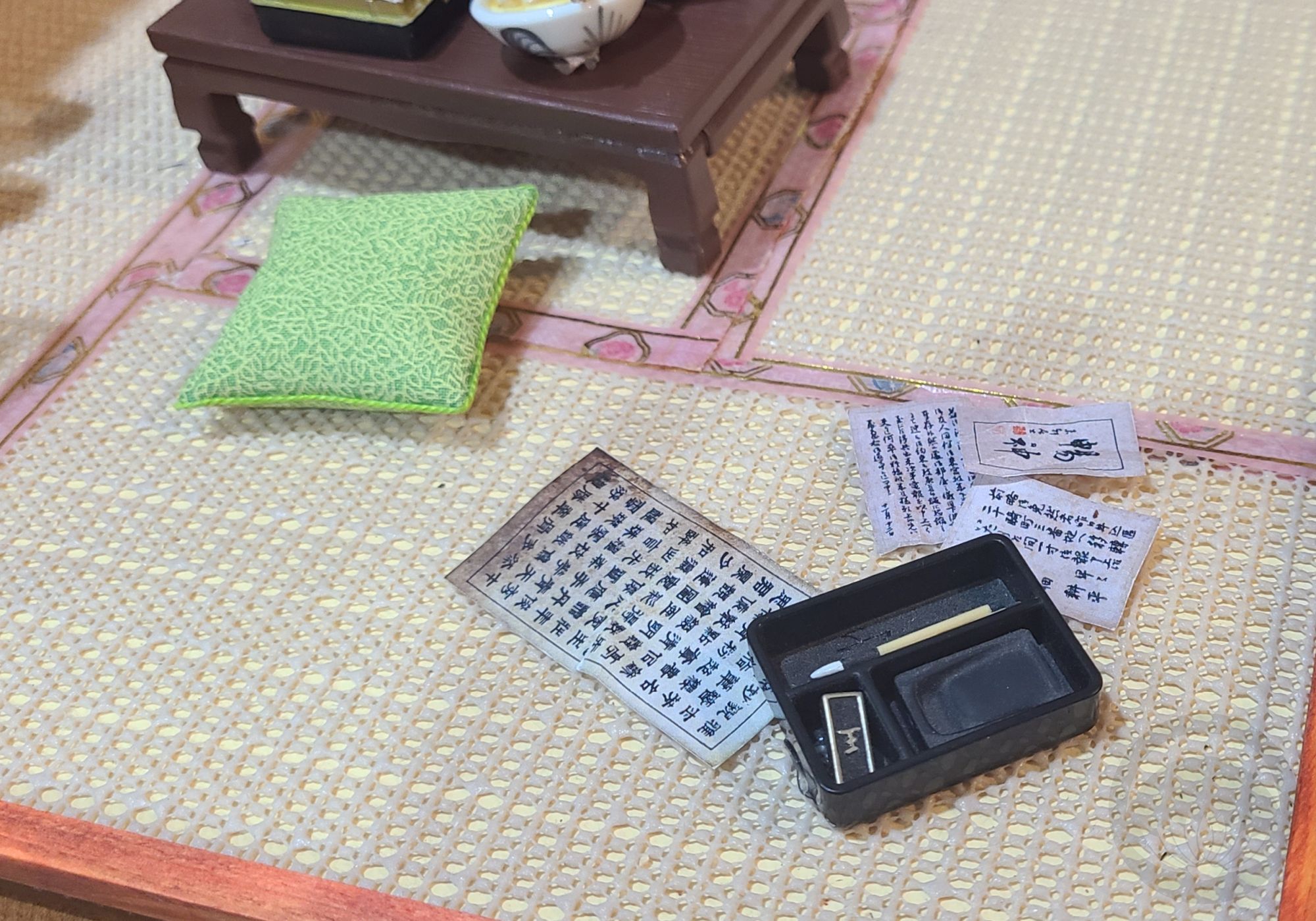
I started out with a basic MDF room-box kit with two walls and a floor. From there, I constructed the inner walls to create the tokonoma, butsudan alcove, and decorative shelving using square balsa dowels I hand-staned, and pine craft rectangles. I wallpapered the whole thing in decorative rice paper. The tatami ended up stumping me for a while, and then I remembered I had this beige textured shelf liner left over from organising the pantry. A bit of beige paper underneath it and some washi tape to form the borders, and voila. Itty bitty tatami committee! I divided it into typically balanced proportions, ending up with a room that’s four and a half tatami, plus the toko and shelving spaces.

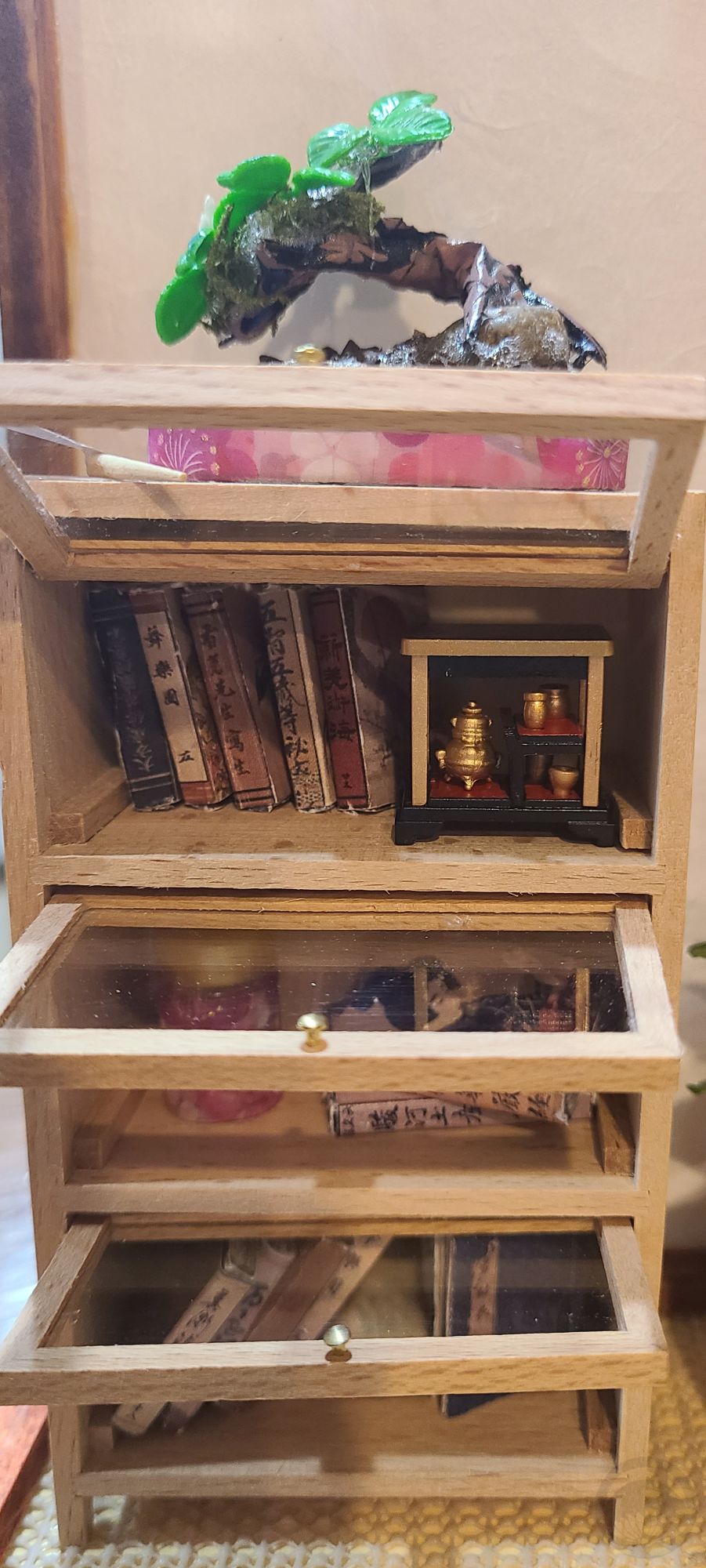
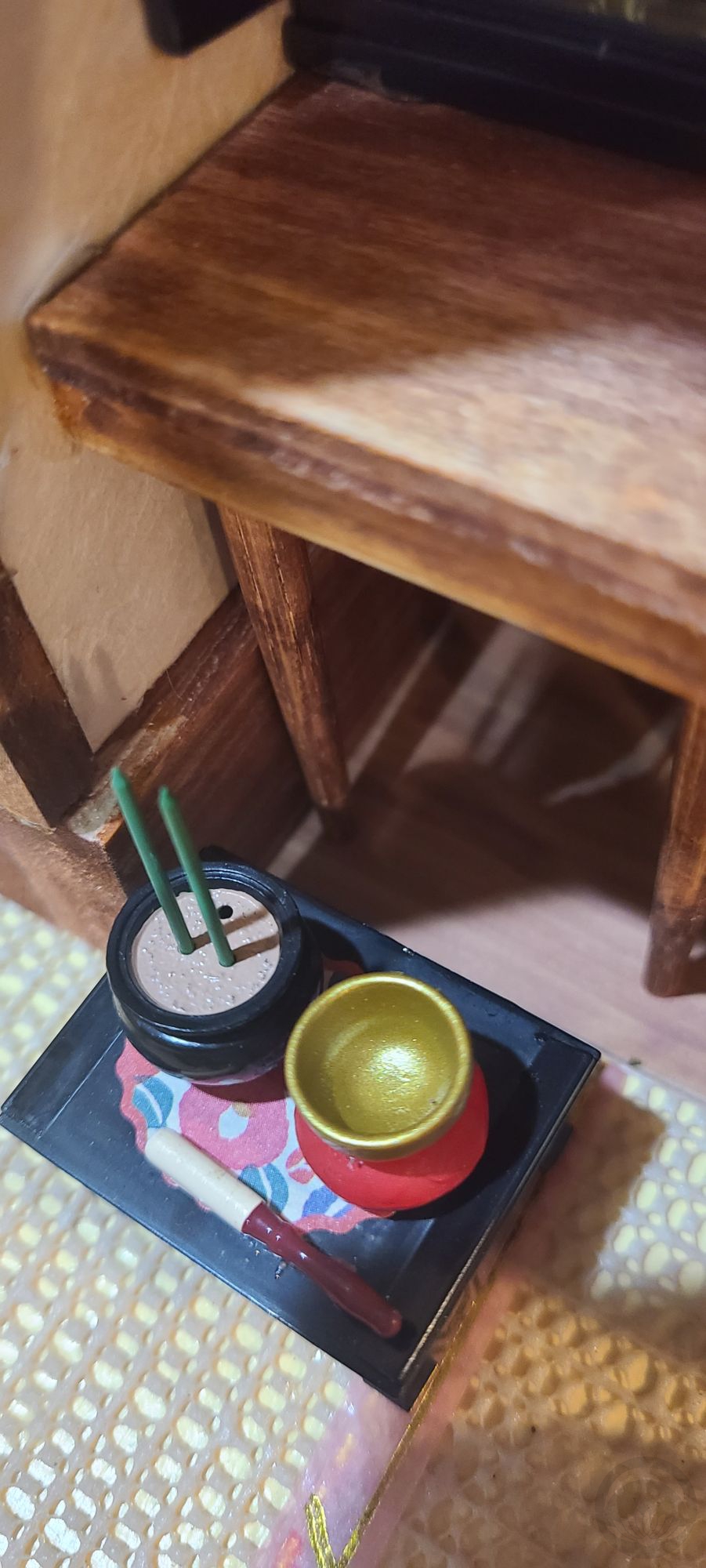
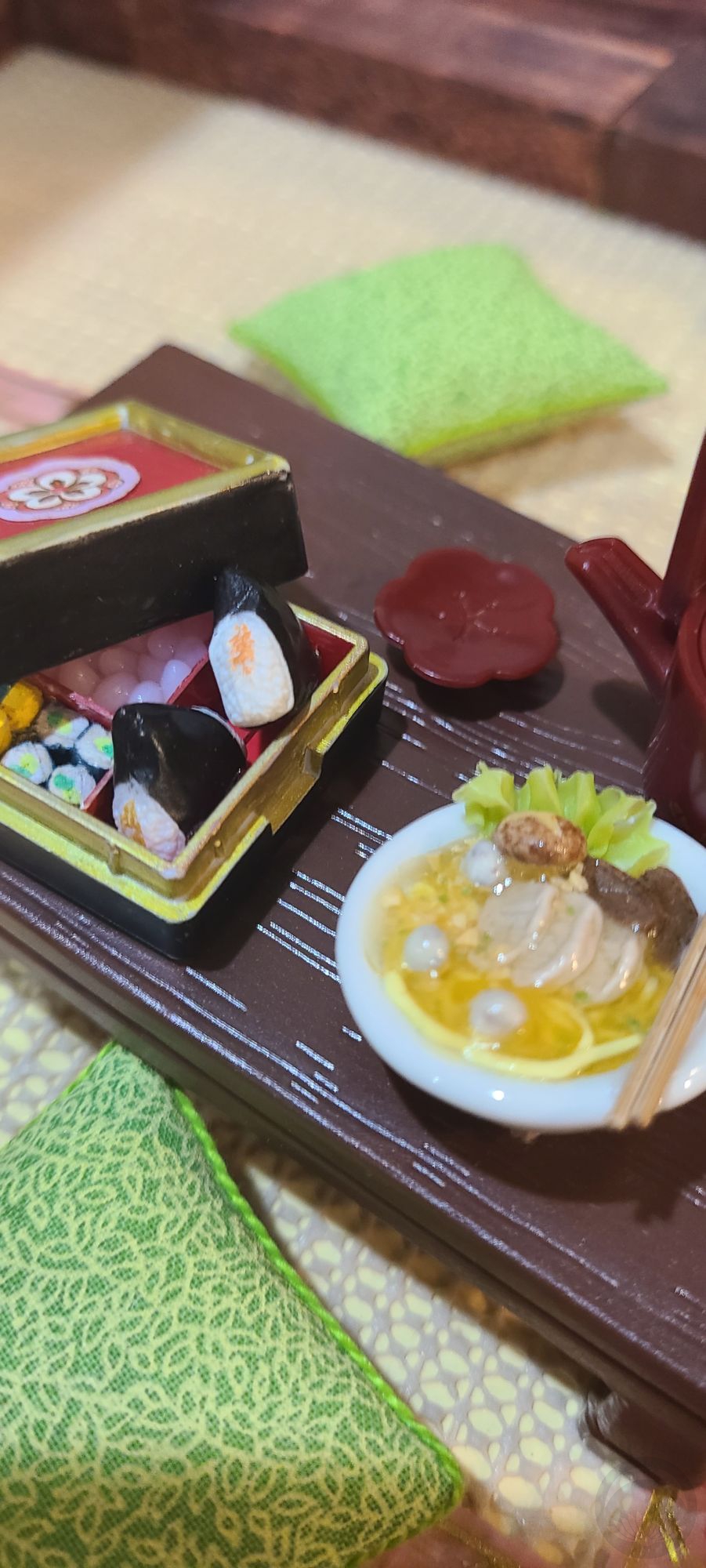
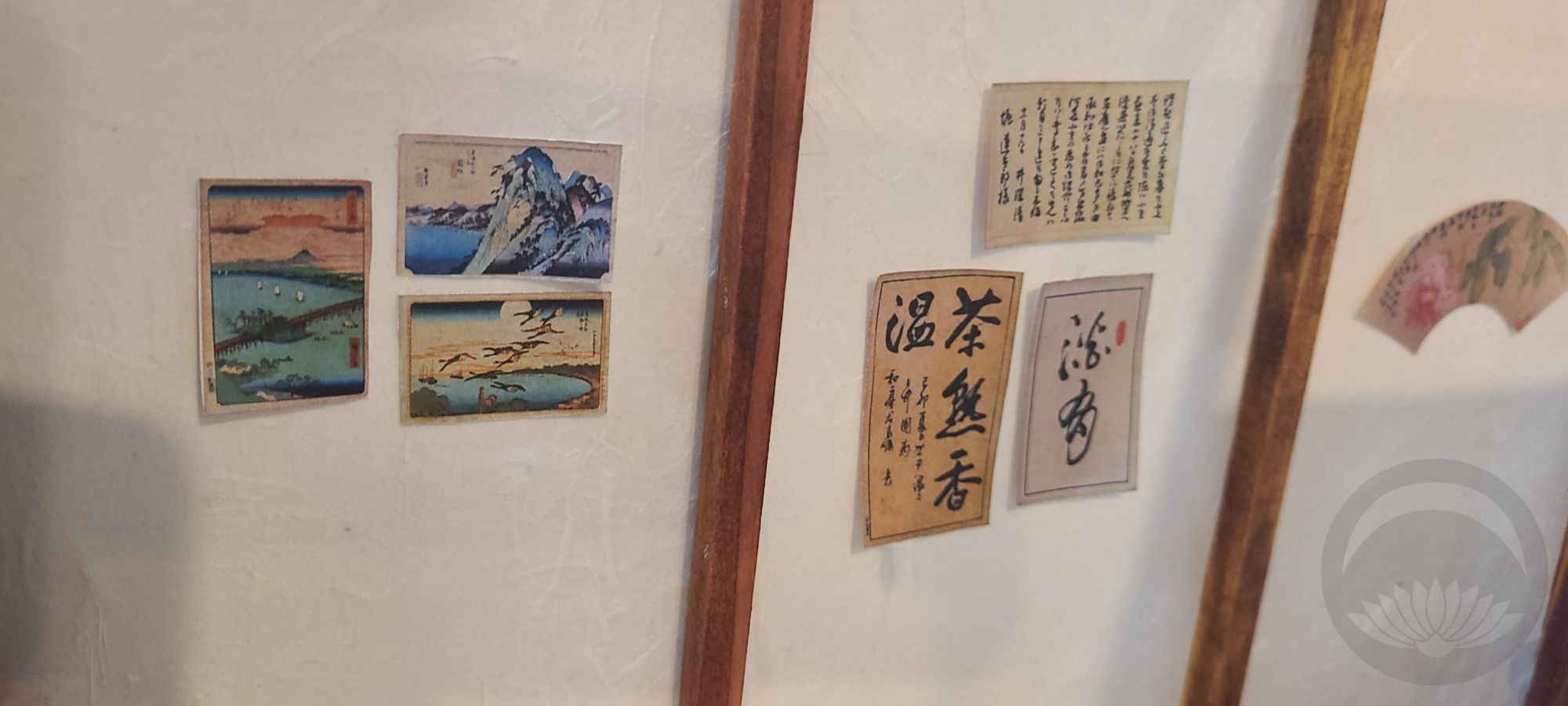
Once the room structure was complete, it was time for the fun part – decorating! This is always my favourite part of making a miniature or diorama, since it’s where things really start to come to life. They go from looking like boxes to looking lived-in. I like to imagine the resident of this room is a young woman trying to balance modern and traditional life based on her hobbies (calligraphy, reading poetry). She knows she’s too old for it, but she still puts her childhood hina dolls out for Girl’s Day and still pays her respects to her family altar, but she’s also busy enough that she picks up pre-made meals on her way home from university. I don’t generally imagine this much of a resident in my scenes, but every detail I added here just kind of helped flesh her out, what can I say?

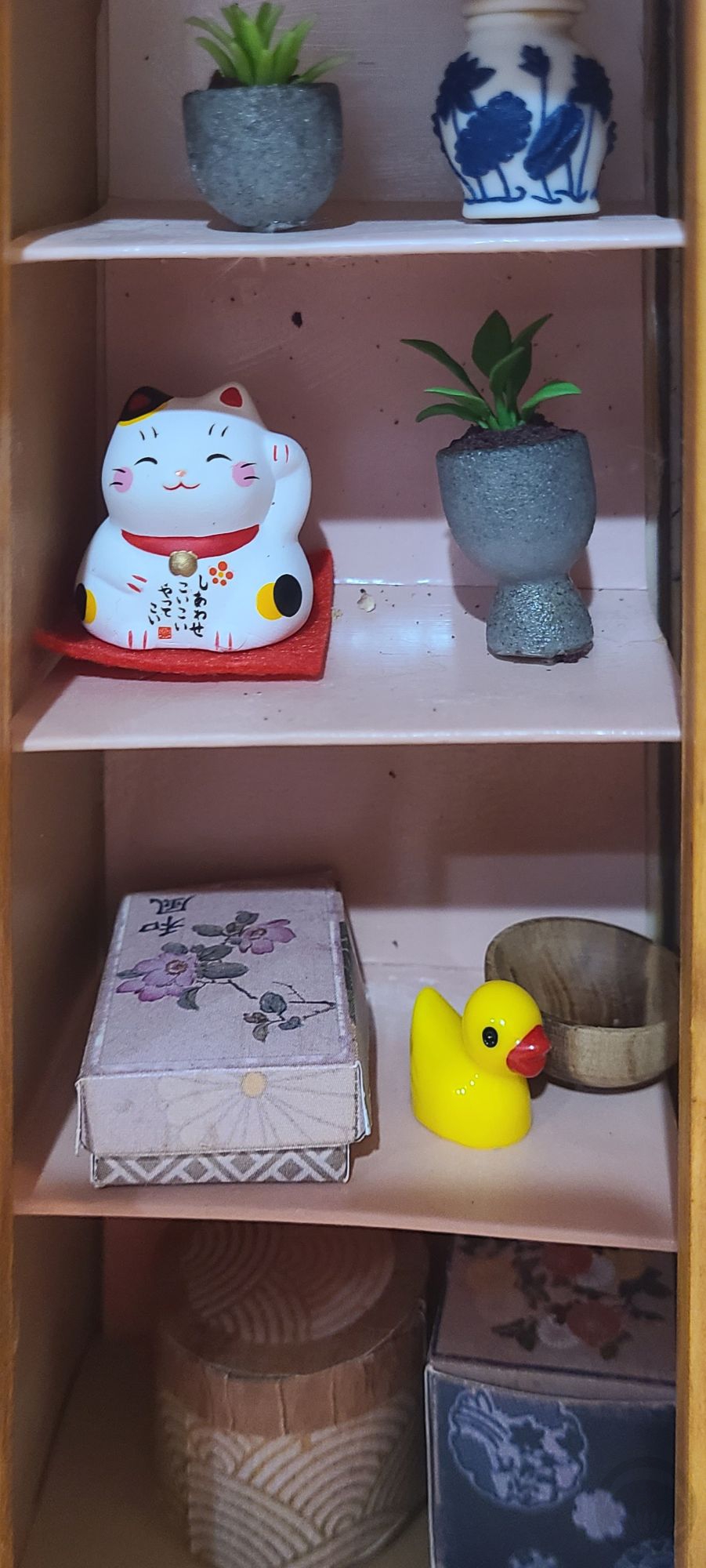
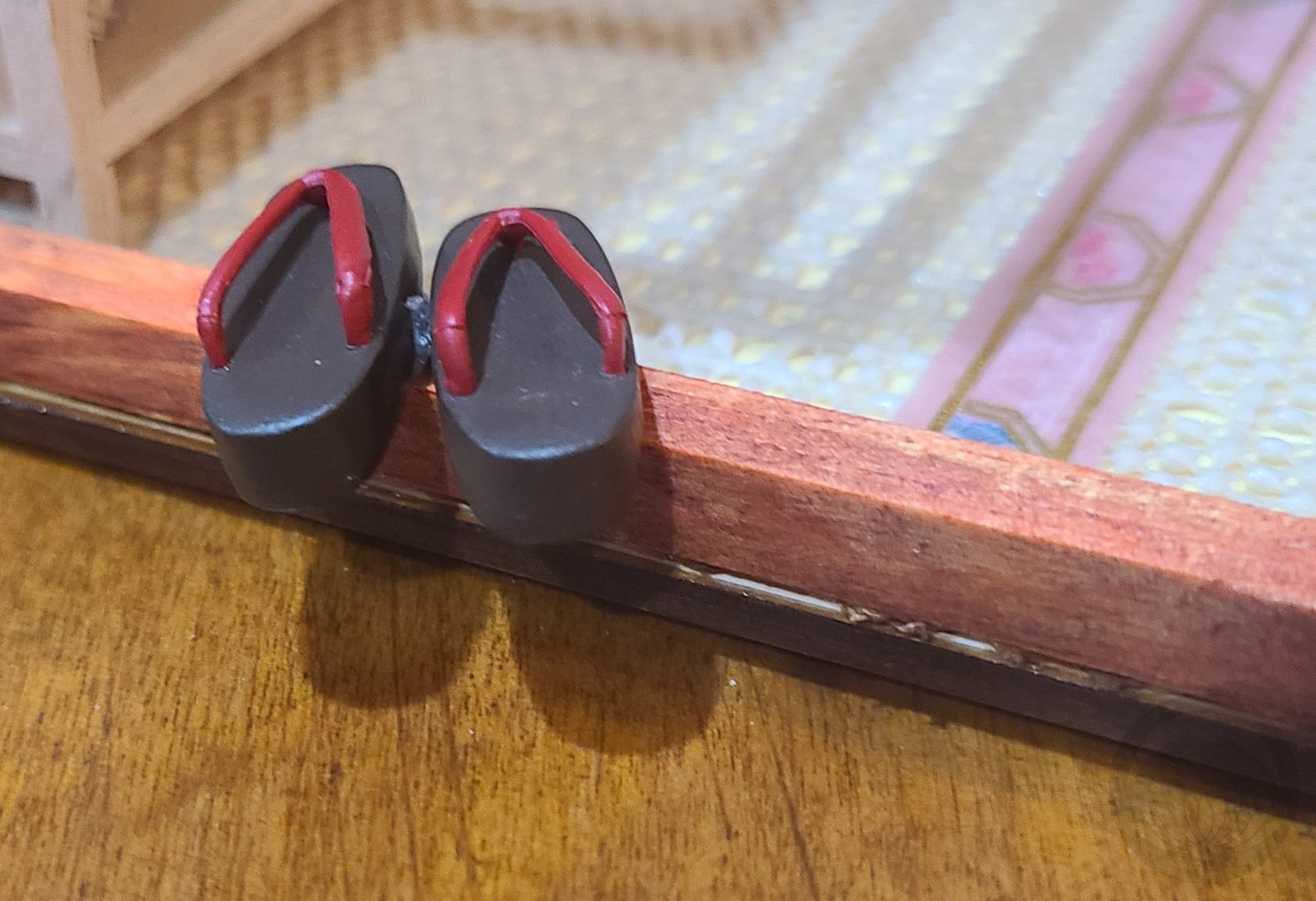
The details are a combination of printables from Etsy (links to the shops below), Re-Ment miniatures (the hina dolls, zori, and butsdan set, as well as the onigiri in her bento box), and a few small items I picked up from specialty shops on our recent trip out to Torrance. The tiny blue and white ginger jar was quite possibly the most expensive individual element here, at nearly twenty dollars, but it’s so stunning in person I knew I had to have it.

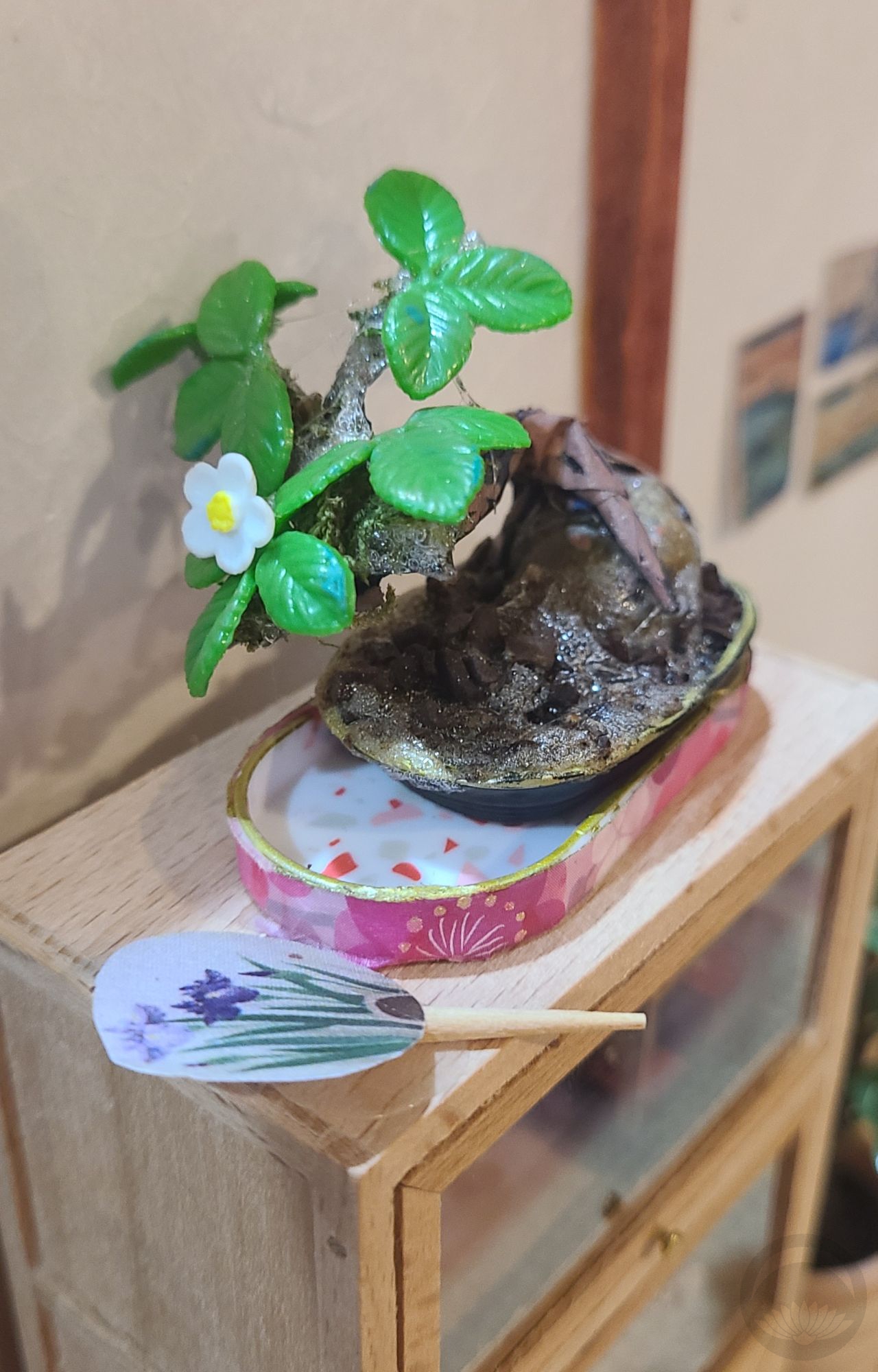
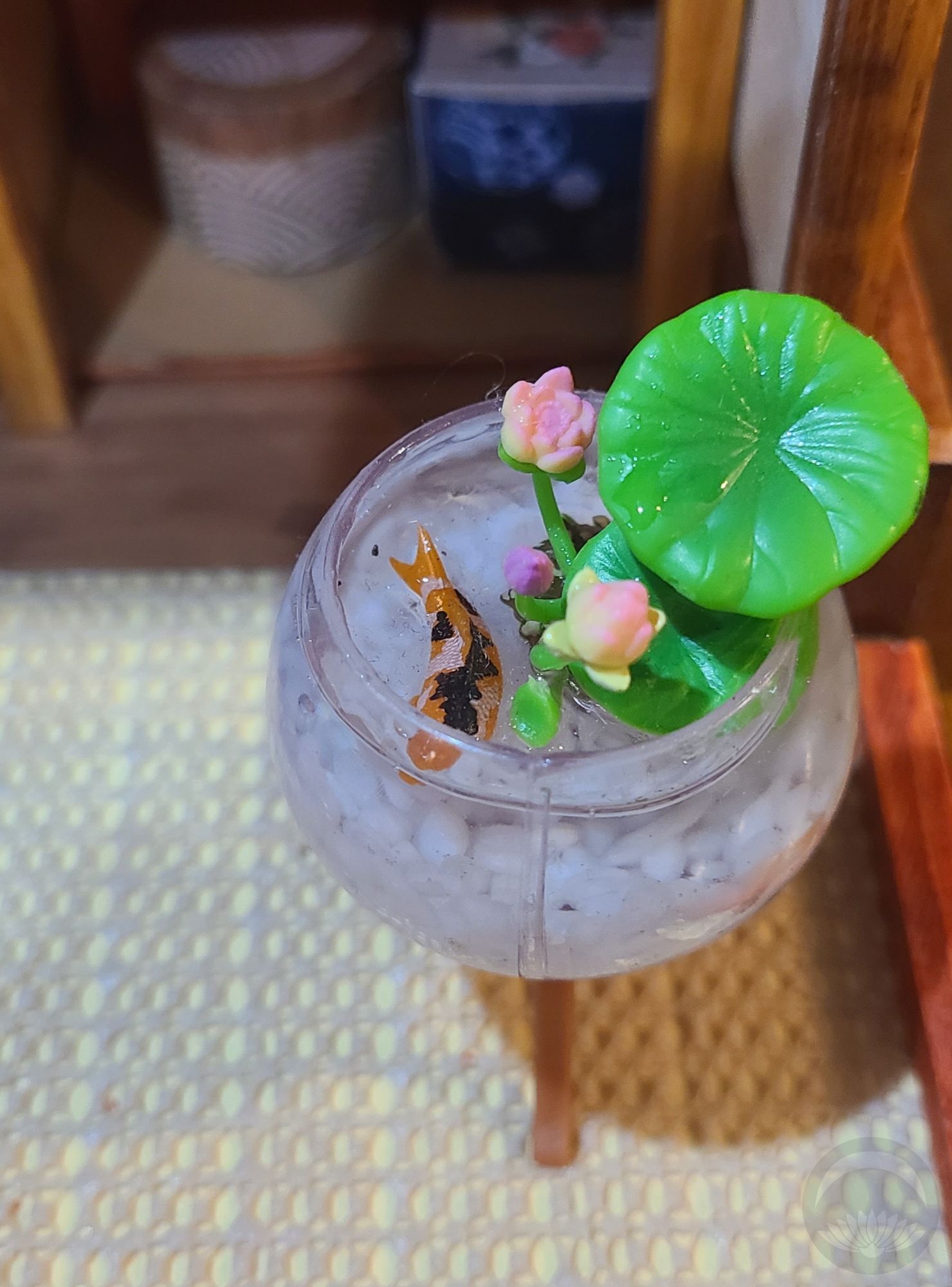
The greenery is all from MGA’s MiniVerse DIY sets. The ikebana was a kitbash of a few flower sets, the bonsai trunk was handmade and the leaves came from a strawberry kit, the fig tree and small plants in the shelving unit were just placed in as-is, and so was the tiny koi in the bowl with lilies. They’re not quite to 1/12 scale but I think there’s a lot of leeway to be had with plants, since they’re never one fixed size anyway.

Please enjoy exploring this tiny space as much as I loved creating it!

Printables came from the following  Etsy shops, but I’m afraid I’ve lost the references as to what came from where.

As for the Re-Ment miniatures and MGA’s MiniVerse; they can both be found on Amazon.

 This post contains affiliate link(s). If you choose to purchase, I receive a small rebate or commission which goes to the continued maintenance of this site. 
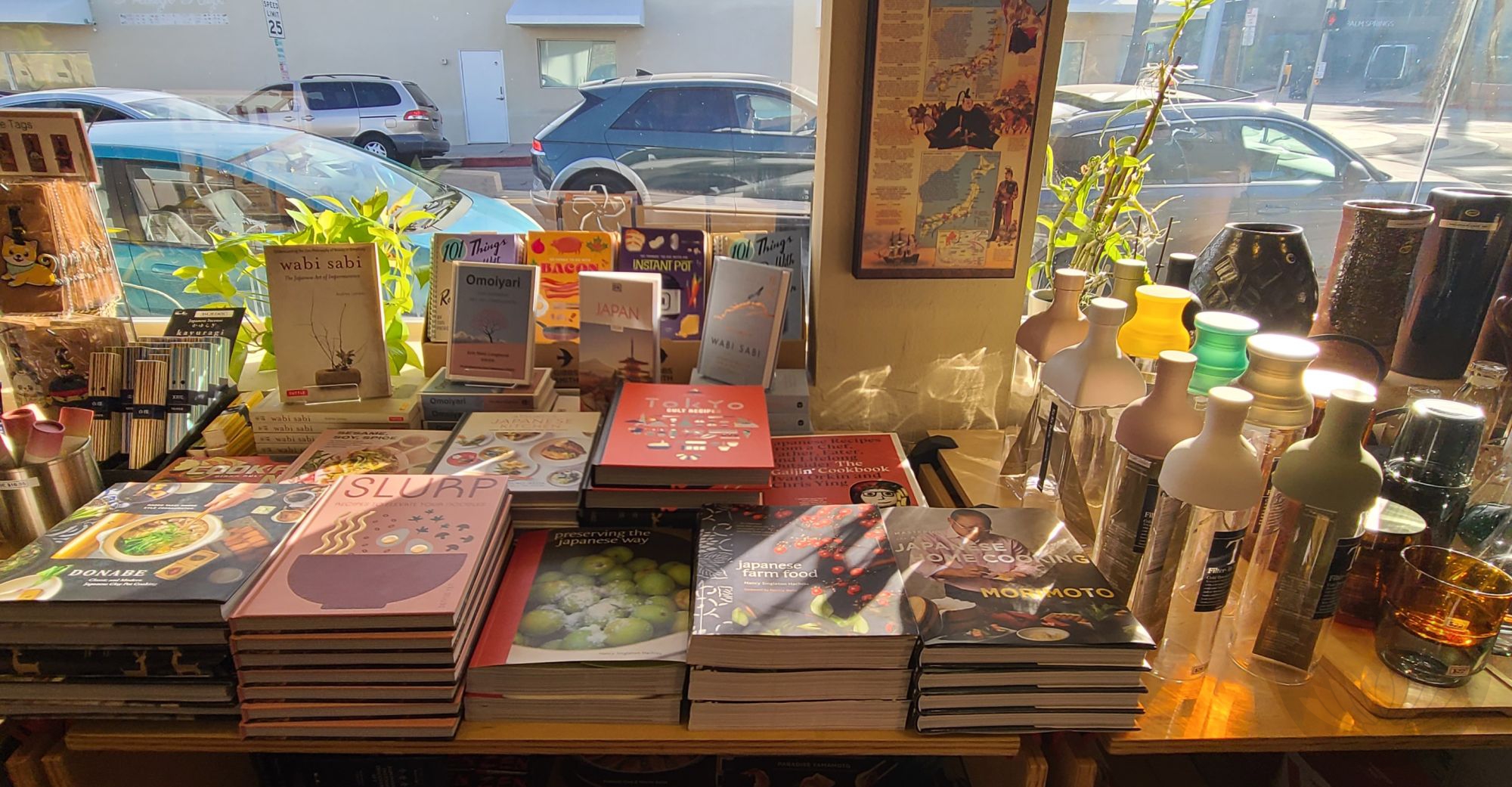
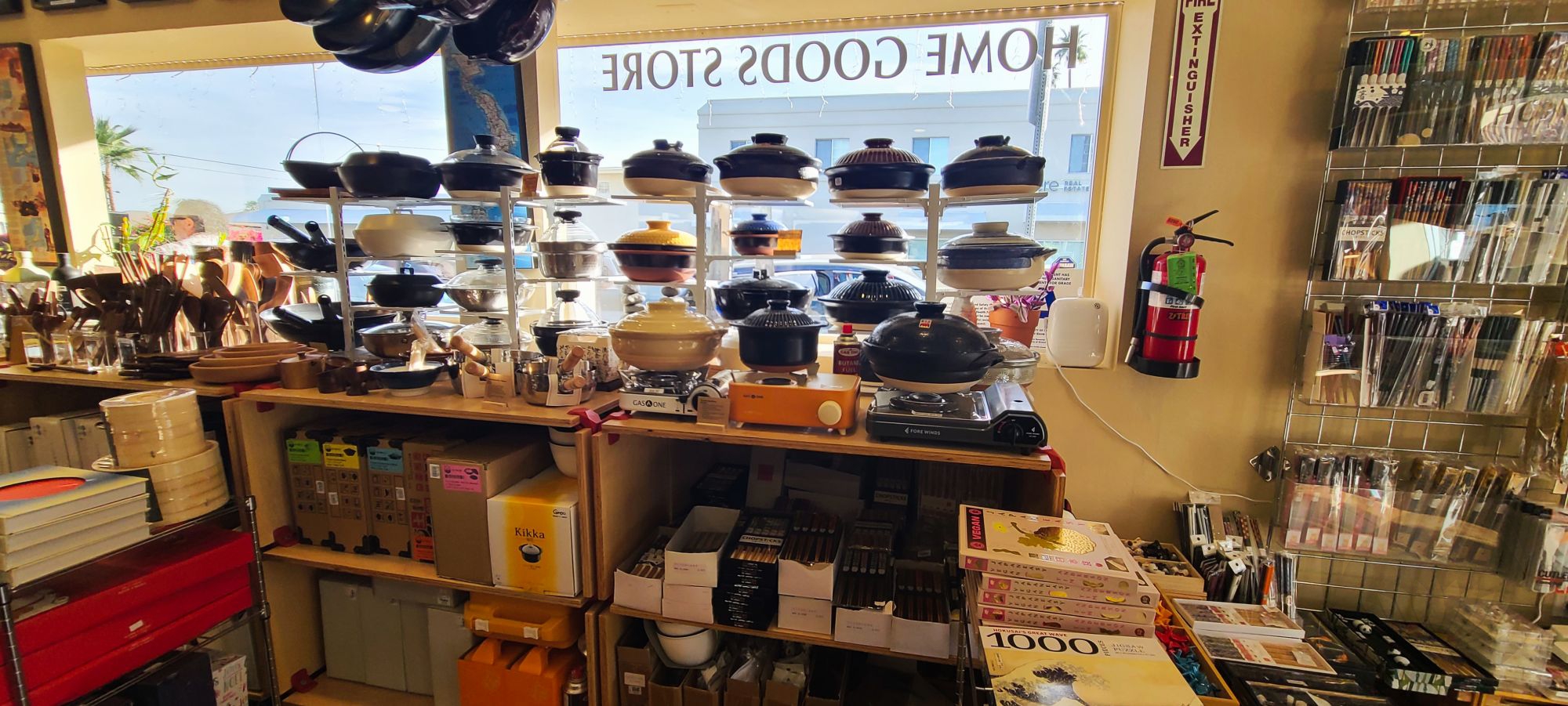
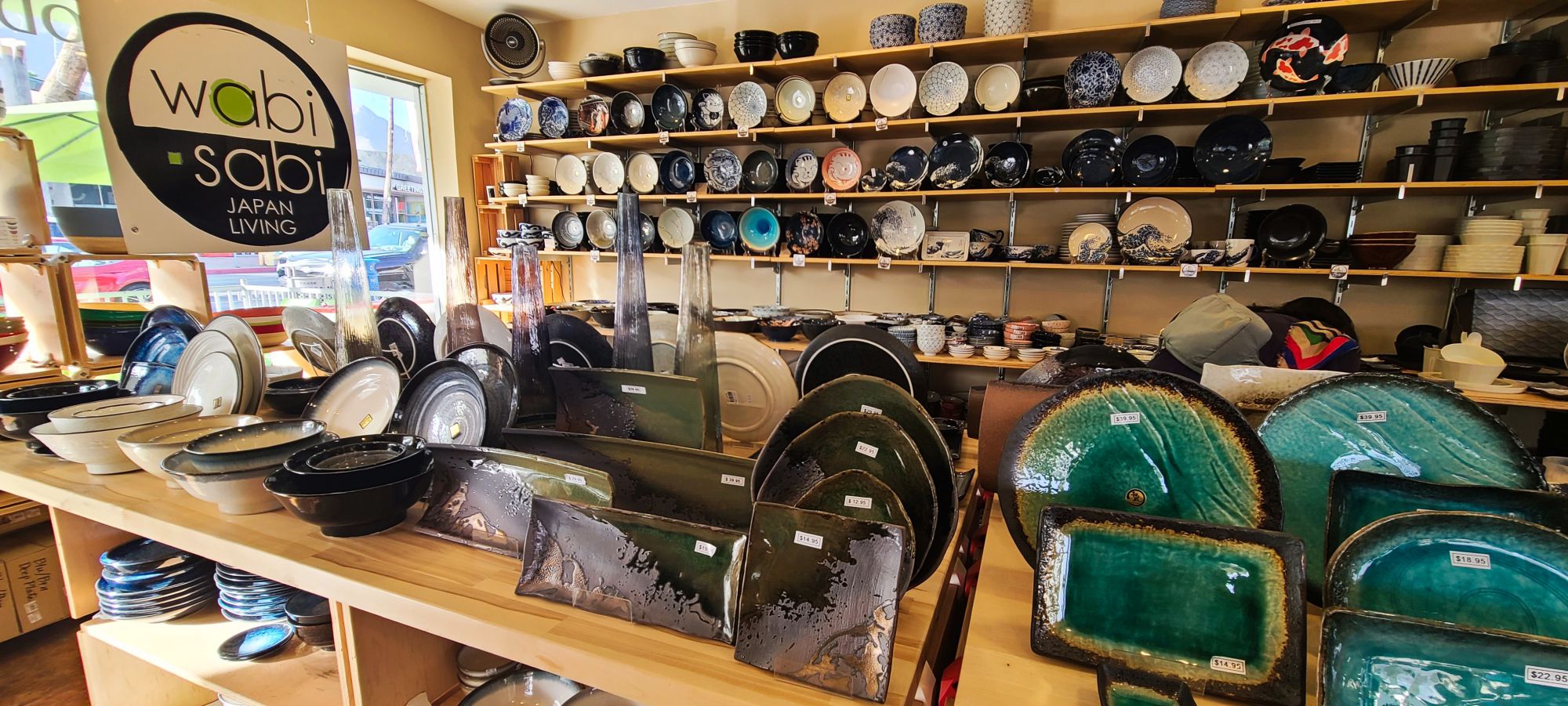
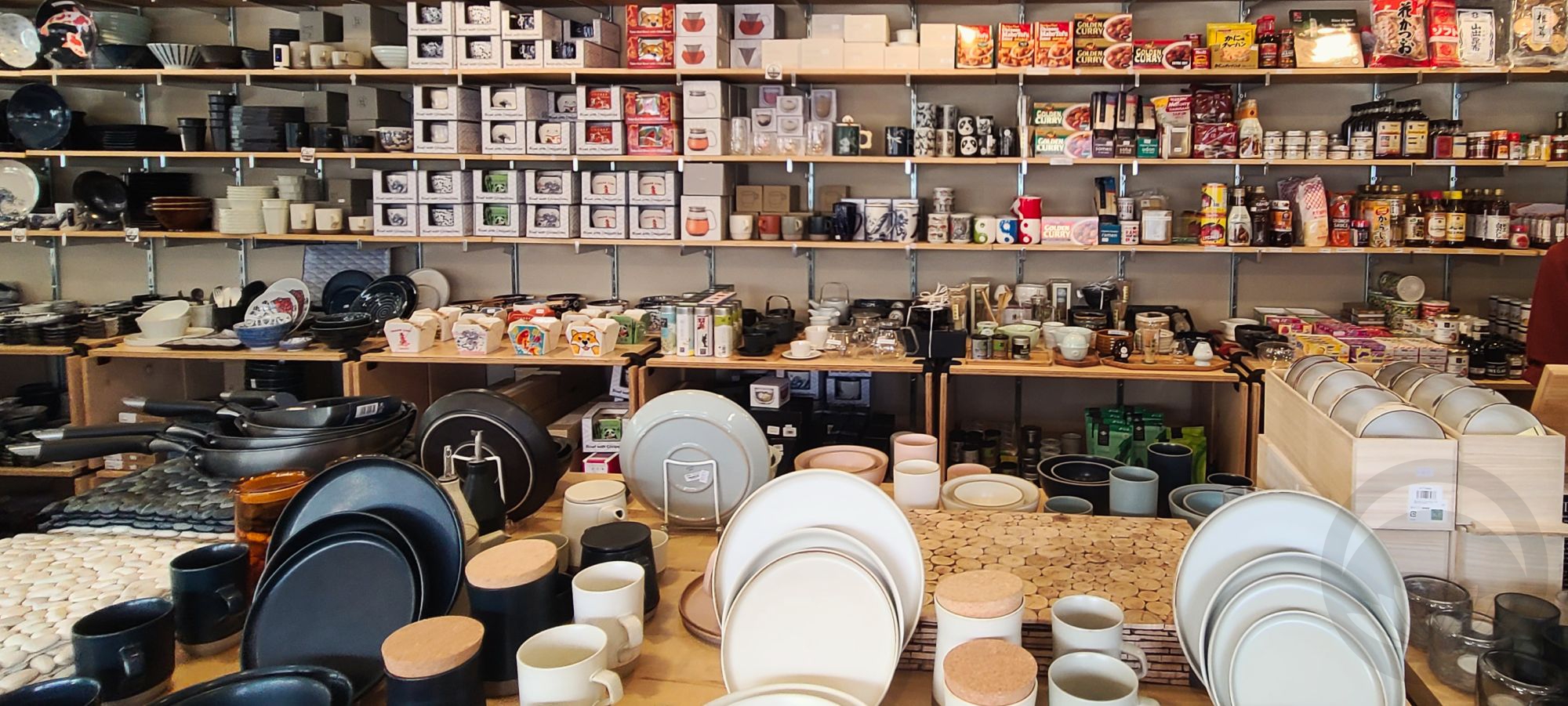
Field Trip – Wabi Sabi Japan Living, Palm Springs CA

If you follow any of my social media where I post short-form videos, you have seen my quick 360 tour of Wabi Sabi Japan Living in Palm Springs recently. If you’re not following my socials, you might be missing out on fun things!

I have been wanting to check out this store since I first started visiting Keith here in southern California, but it just never worked out until recently. We’re typically in the Palm Springs area in the evenings and the shop closes at 5. But recently we made a point of heading out that way specifically so I could browse, and I’m so happy I did!

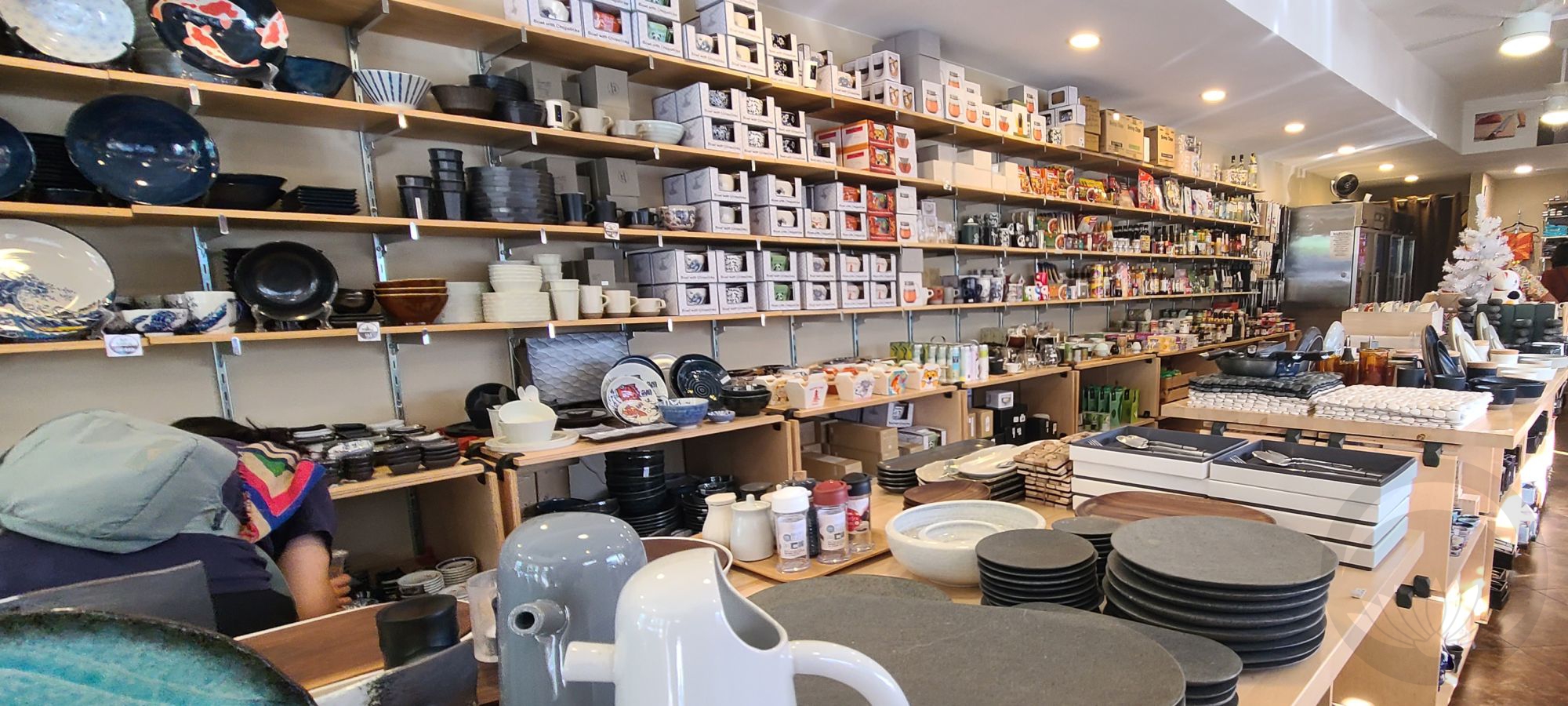
When you first walk in, you’re greeted with a beautiful abundance of handmade ceramics and a wall of more adorable chopsticks than you could begin to imagine. There is also a fantastic selection of books, from art and ikebana to a huge variety of cookbooks. I fell in love with Japan Style but could not justify it at the time, and then Keith sneakily grabbed me a copy for Christmas. As they say, to be seen is to be loved. ♥
 

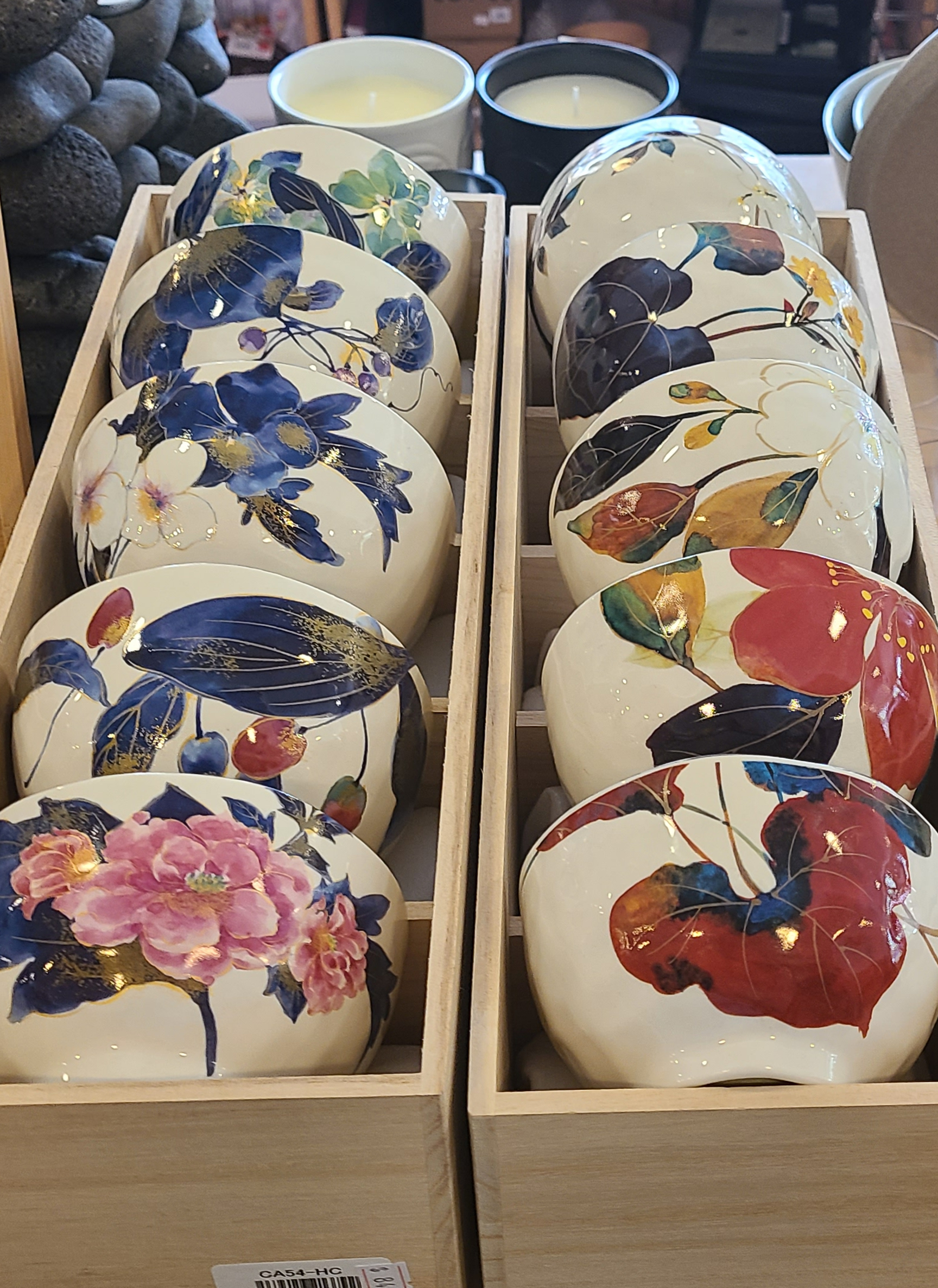
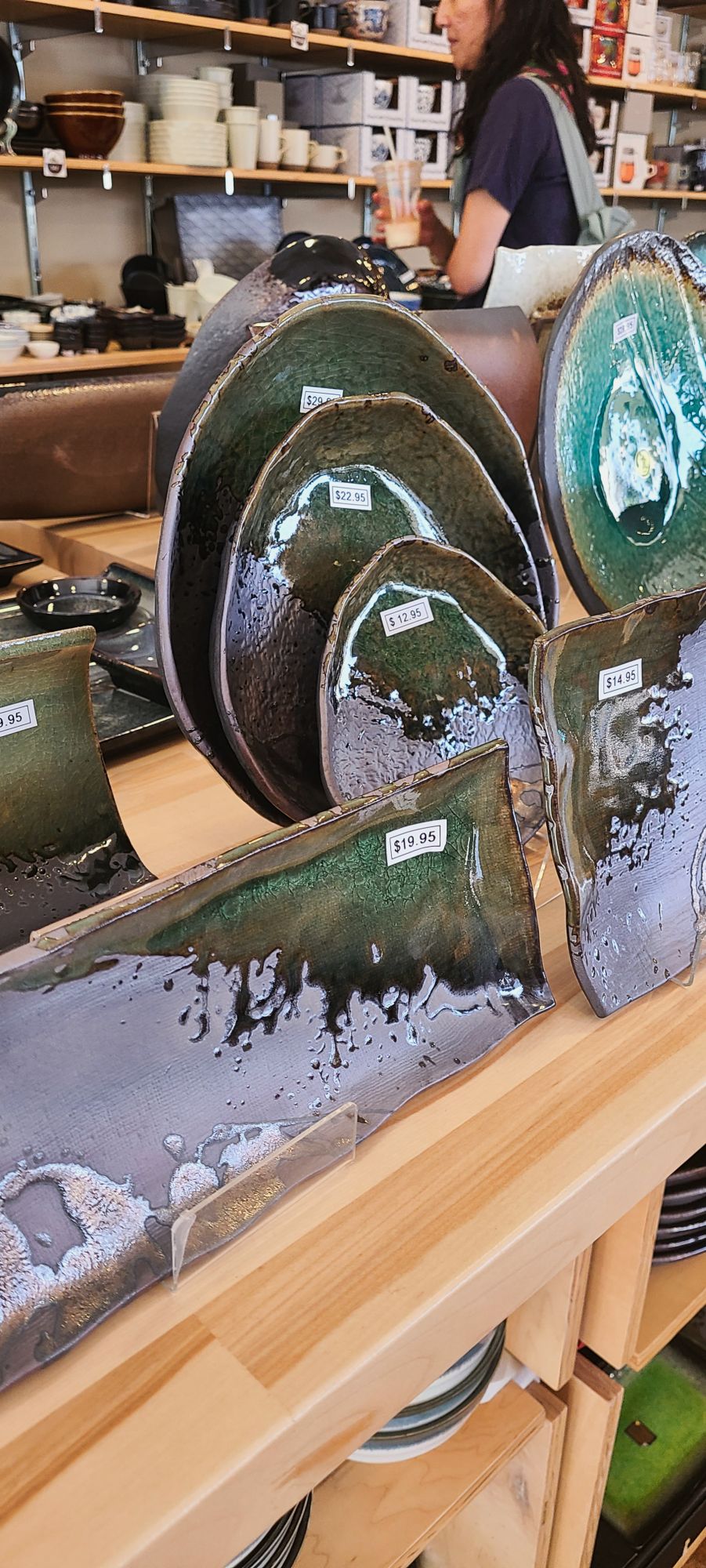
Facing the back wall, there is an absolutely breathtaking assortment of Japanese ceramics and dishware, in a very reasonable range of prices. You can purchase individual plates or full sets if you’re setting up a home or redoing your entire kitchen. There were so many pieces I wanted to take home, but both money and storage space are at a premium in my life right now so I had to exercise restraint. I particularly fell in love with some of the more earthy, textured pieces and some delicate mino ware floral bowl sets. If and when we’re ever lucky enough to have a larger kitchen and room for entertaining, I know exactly where I will be going to stock up!

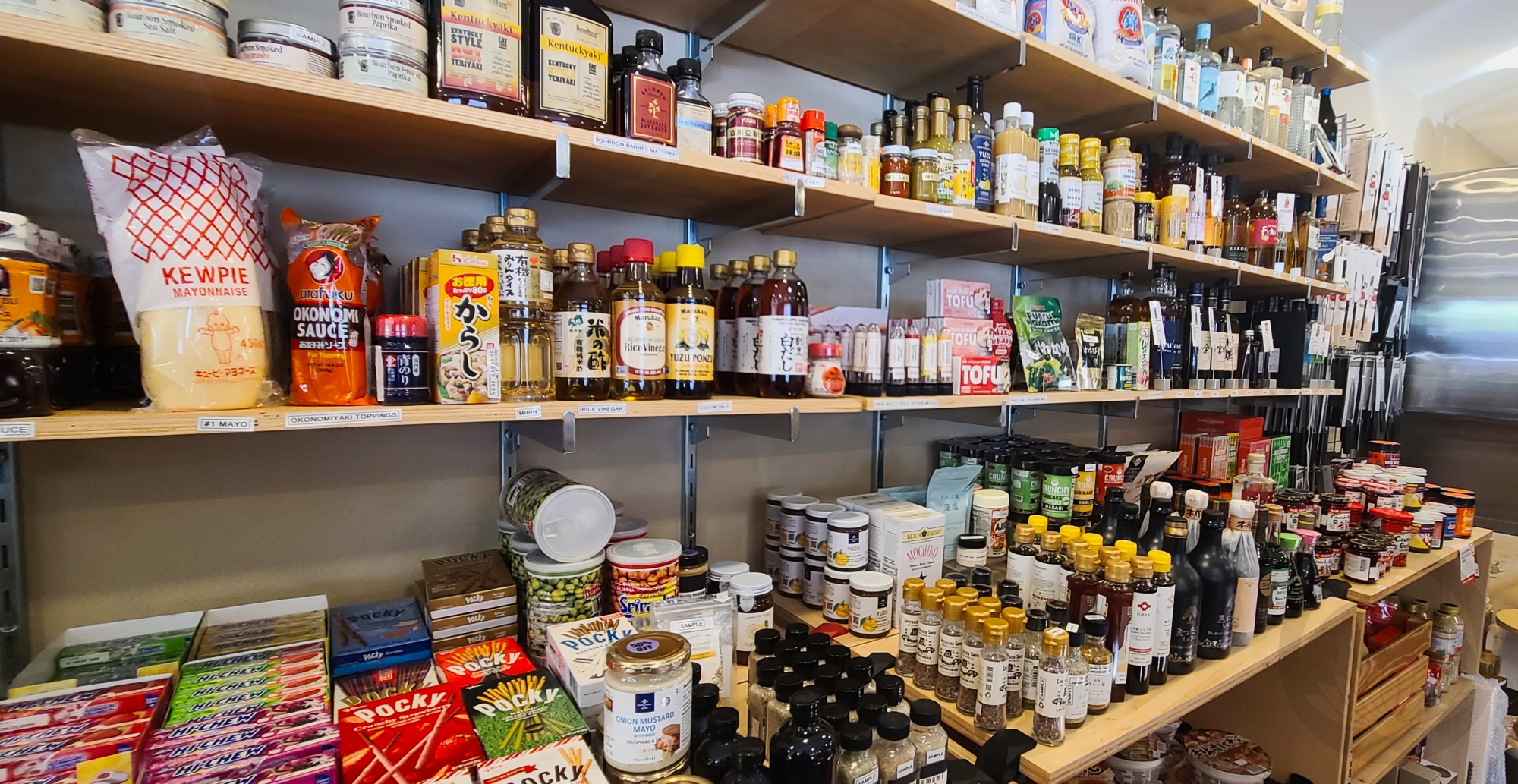
As you head deeper into this little treasure trove, you’ll find the food and drinks. There’s a fantastic selection of dry goods, condiments, teas, sauces, and then a more grown-up section featuring Japanese whisky, gin, and sake options as well as a few specialty liqueurs. I’m a sucker for whisky so I’ve added a few to my list of things to try when my current selection has run dry. Let me know if you’d be interested in reviews of Japanese brands of alcohol, particularly sake and whisky!

At the far end of the store you’ll likely find the staff. The shop is owned by partners Darrell and Osamu (Sam). I spoke to Sam briefly on the phone and met Darrell in person when I went, along with a few other lovely store employees. Everyone there is incredibly friendly, knowledgeable, and helpful. They’ll be happy to welcome you in and either let you browse or offer up suggestions if you’re overwhelmed by the beautiful variety of products!

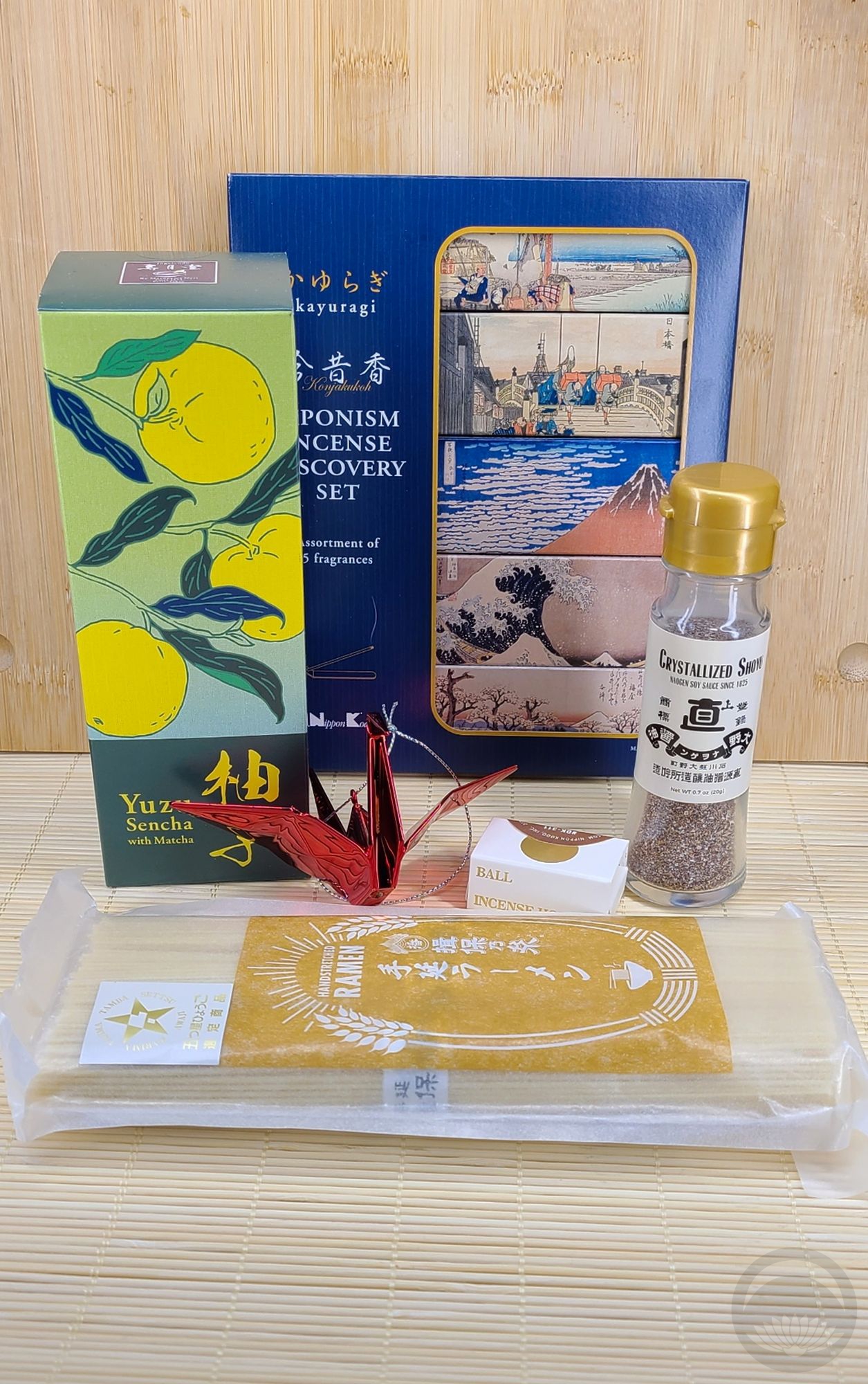
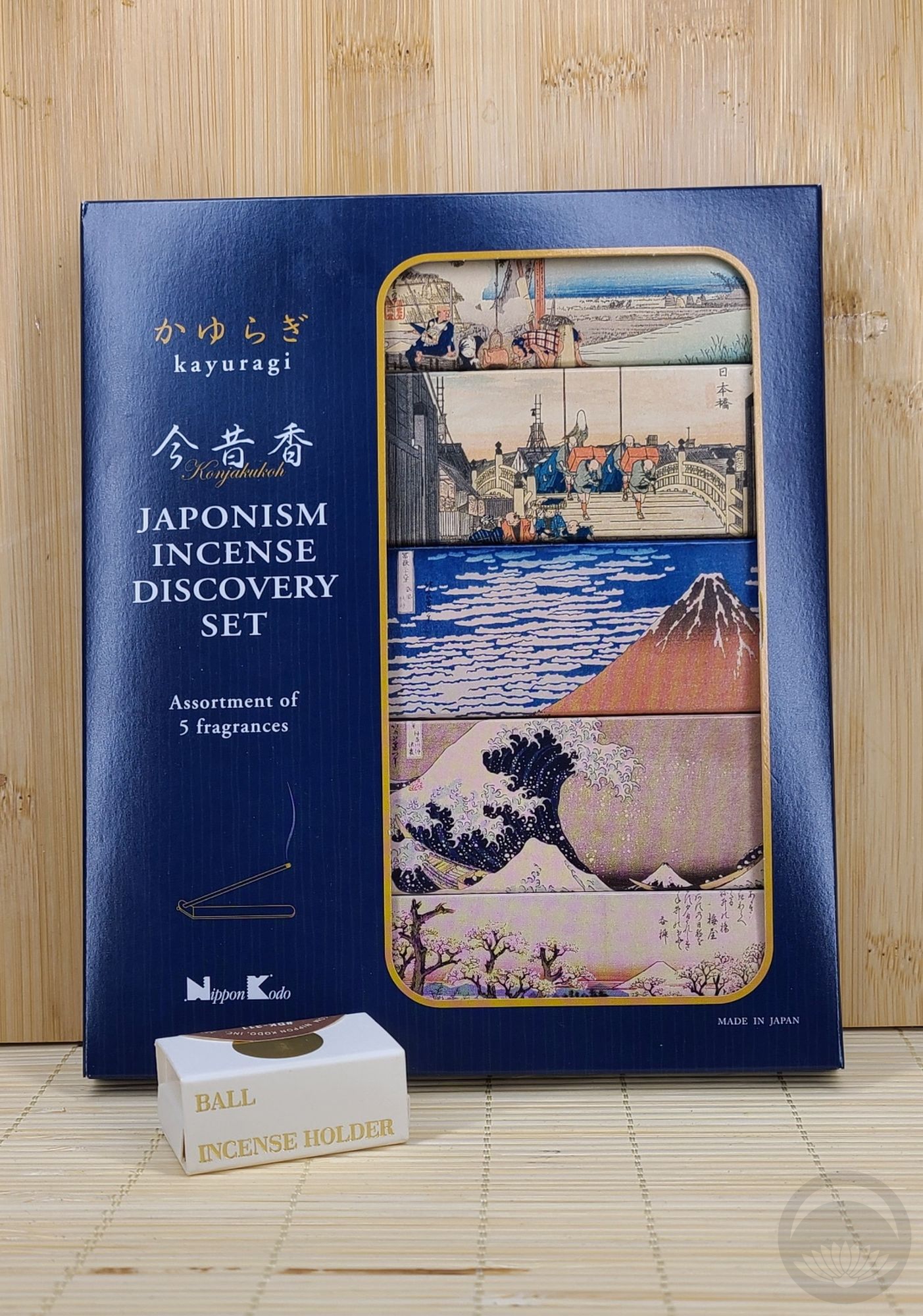
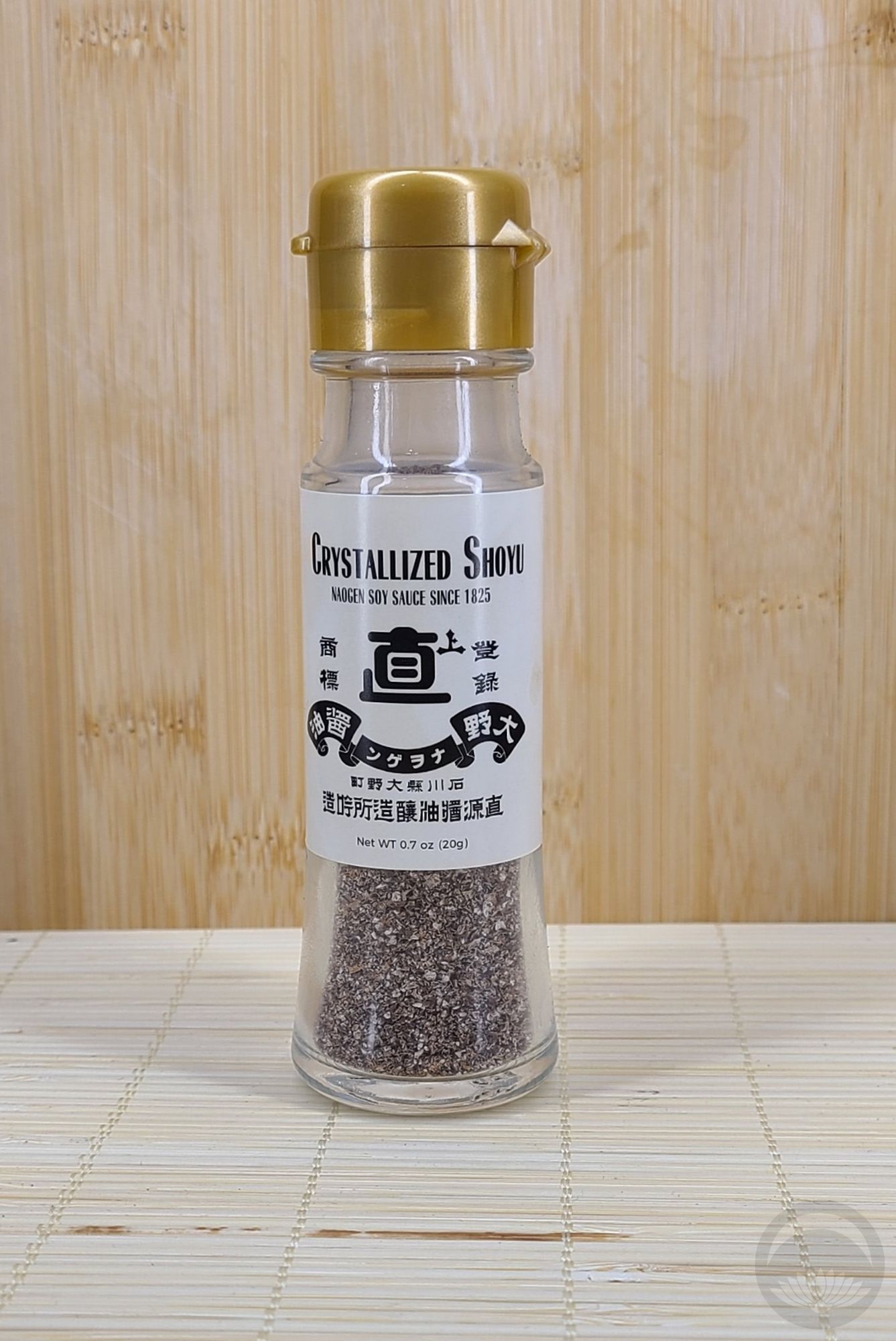
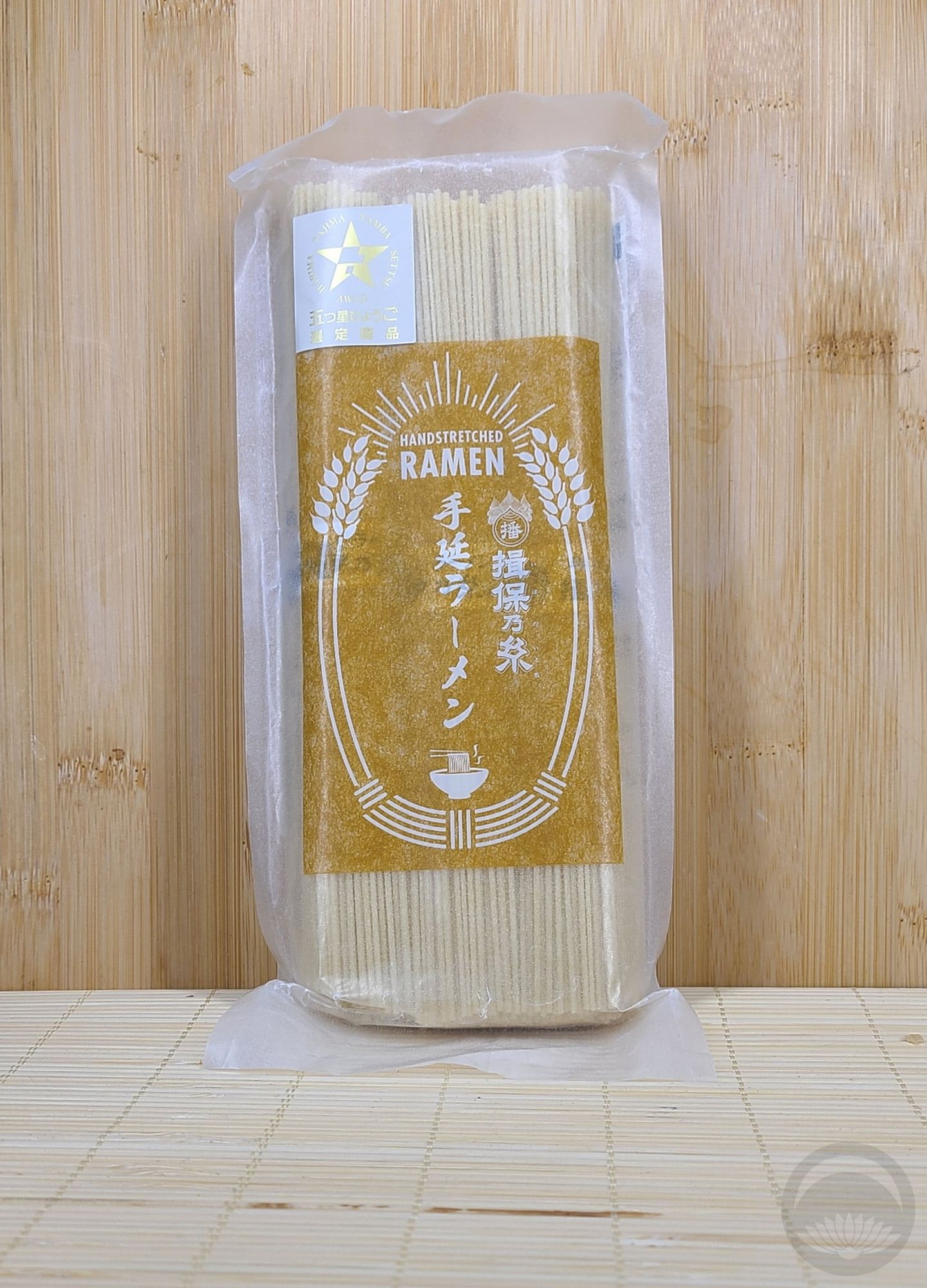
If you’re curious to see what treasures made it home with me, here is my haul!

As you can see, I couldn’t wait to crack into the crystallised shoyu. I put it on tamagoyaki and it’s so good. I can see it working with so many different foods! I will likely do more detailed reviews of the incense sampler and the tea in the future if you are curious!

If you’re in the Palm Springs area, I highly suggest checking out Wabi Sabi Japan Living! They’re open from 11 to 5 every day, and can be found at 300 N Palm Canyon Dr, Palm Springs, CA 92262.

Just for clarity, I was not compensated in any way for this post. I contacted them beforehand to make sure they would be alright with being featured, and making sure I had permission to photograph, but there was no other discussion or promotional agreement of any sort. These opinions are all straight from my heart, as always!

Review – Hibi 10Minutes Aroma

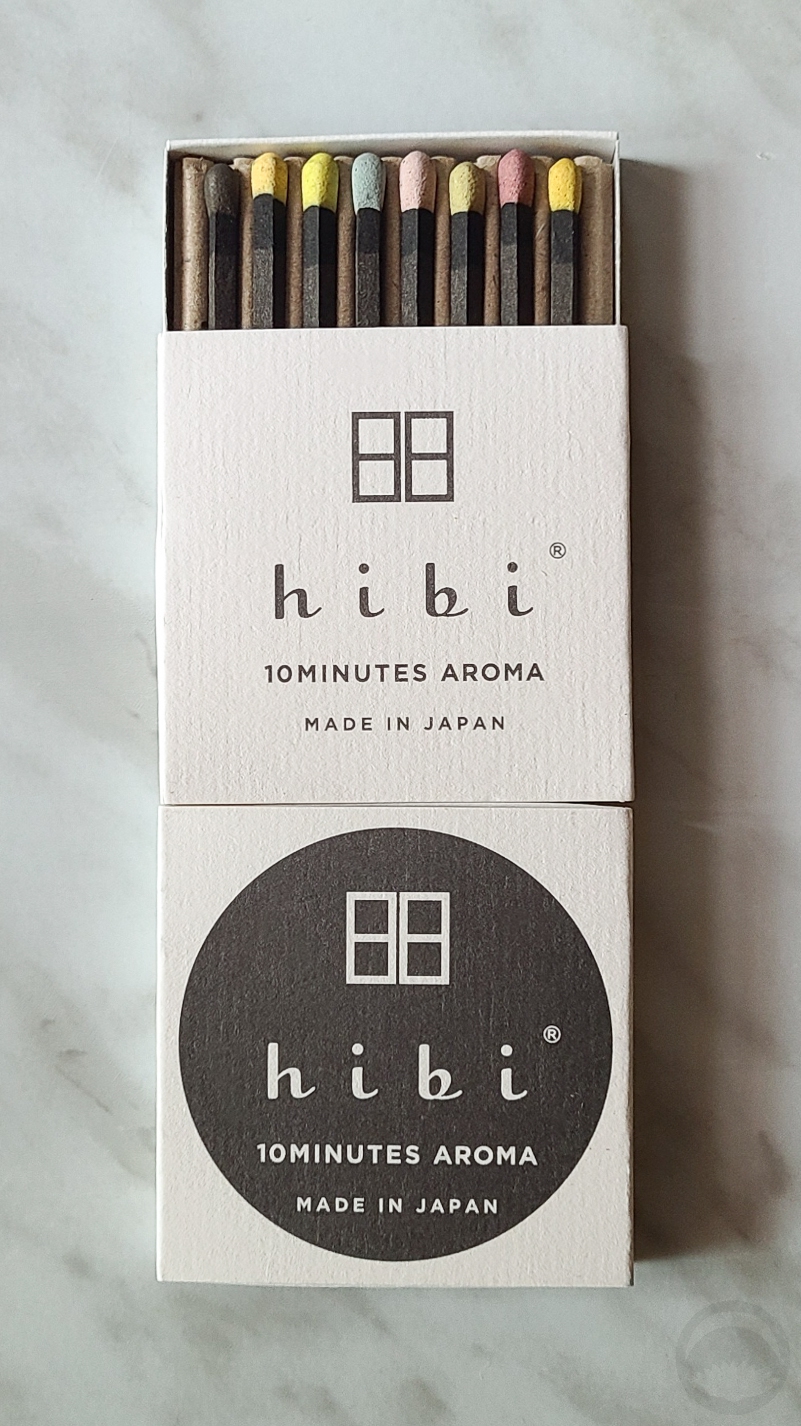
Today I bring you another wonderful little lifestyle product from Japan, to help transport you to a more relaxed and beautiful world, even if it’s only for ten minutes. This odd liminal time of year can be very stressful, and we’re all looking for ways to start the new year with new habits and new routines. Hibi 10Minutes Aroma can help with that, all while bringing the gentle scents of Japan directly to your home. 

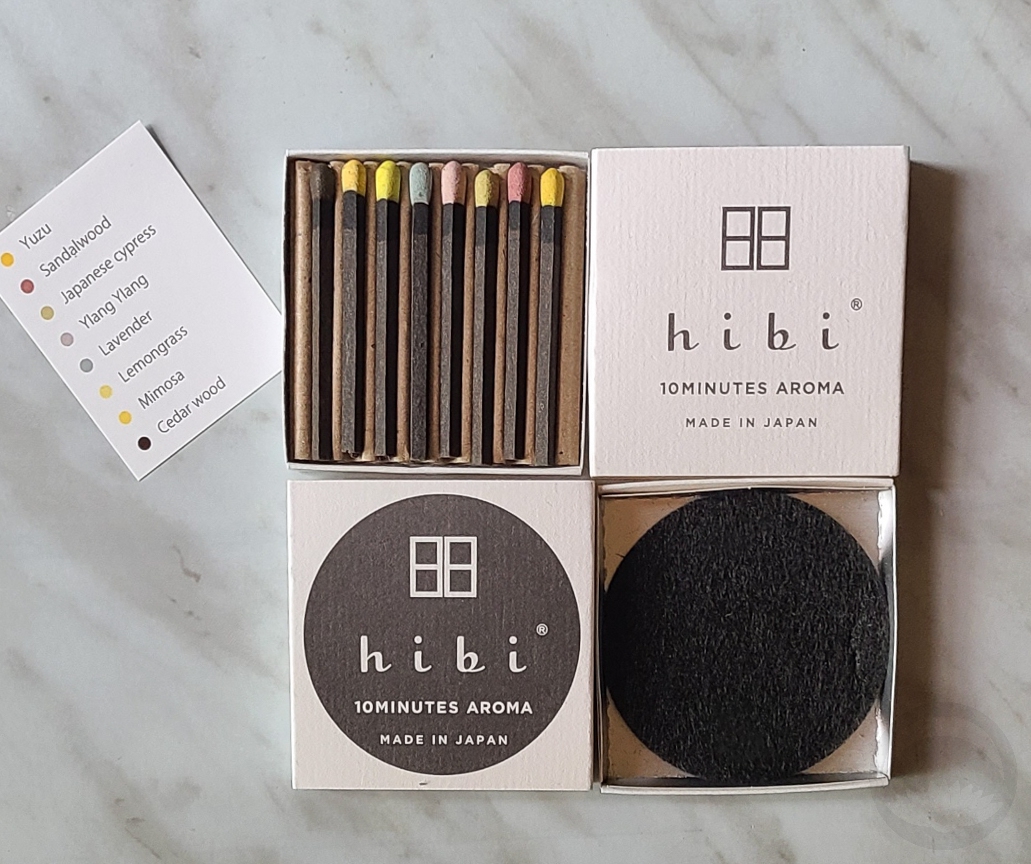
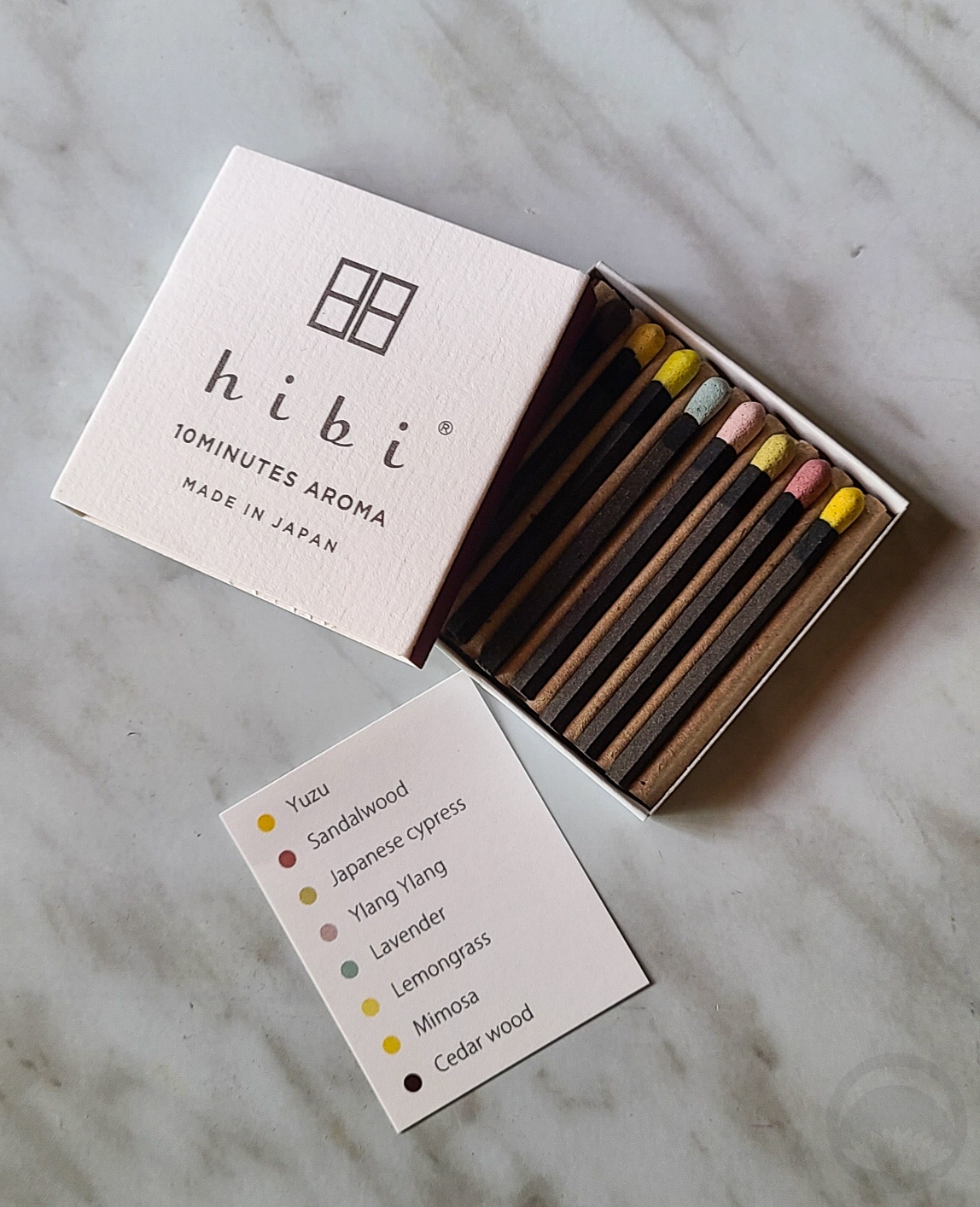
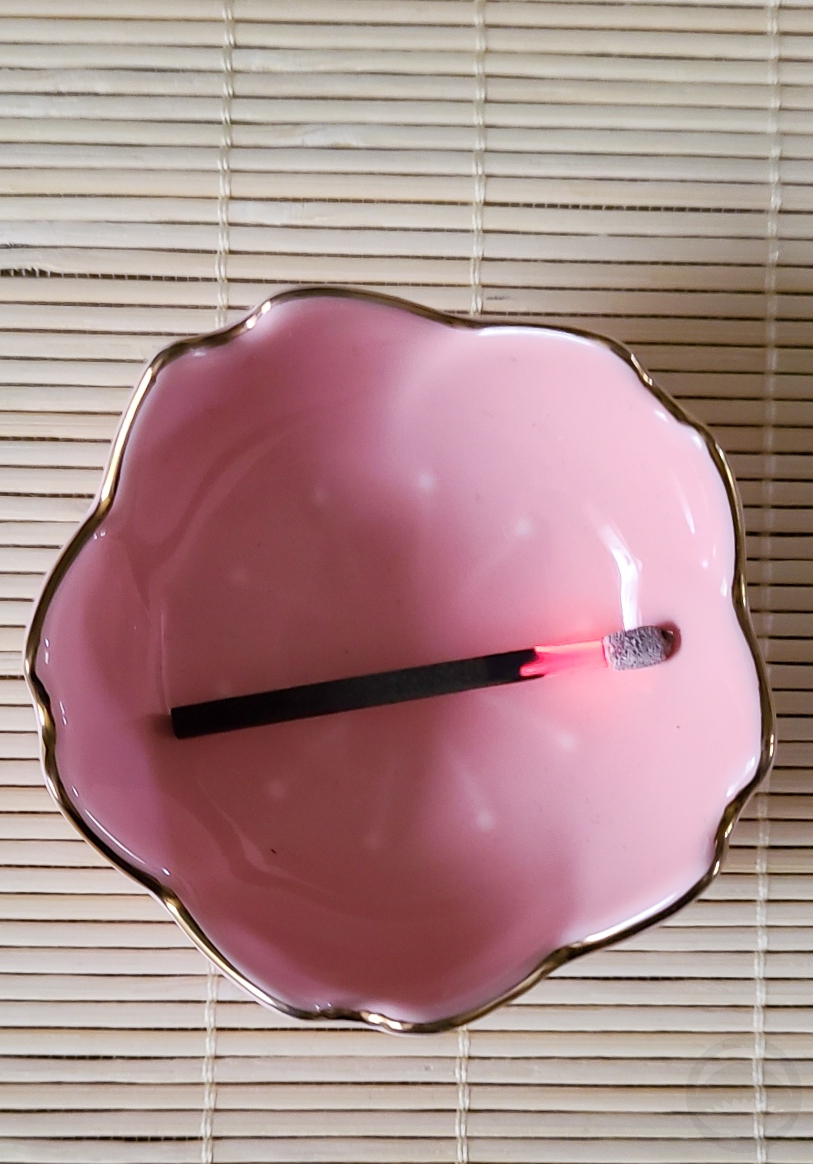
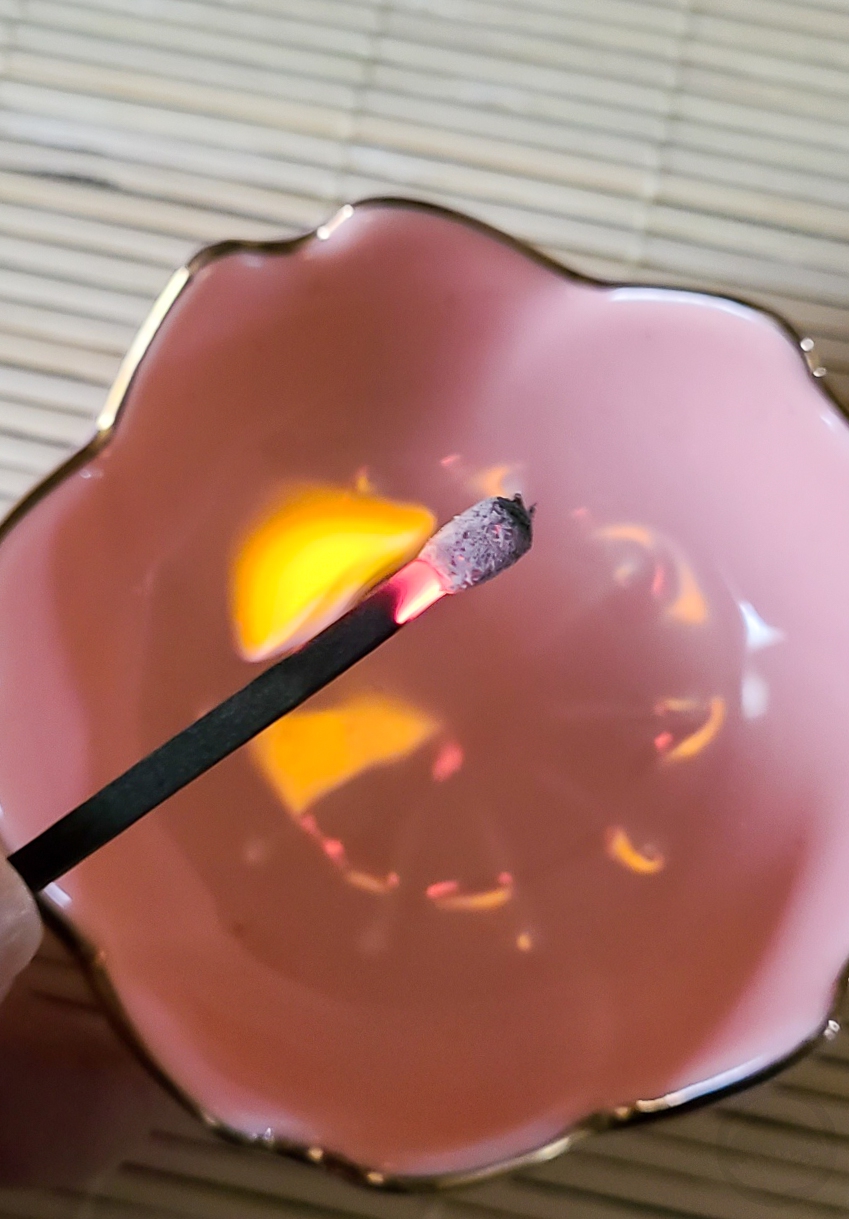
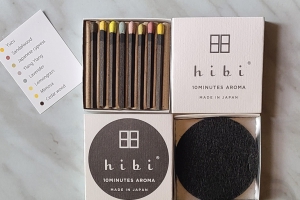
These are a fascinating little product. They may look like standard strike-anywhere matches, but the entire stick is made of tightly compressed incense. You light the head and let it burn down to ash, getting ten minutes of a transportive fragrance that surrounds you.

I chose one of their sample packs, to get a variety of scents before committing to a volume of one or two without knowing what they smelled like. I am glad I did, because the variety here was absolutely lovely. There were some bright, fresh scents like yuzu or lemongrass, some gentle florals like the ylang-ylang, and some deeper woody notes like the sandalwood. I’d highly recommend snagging this pack as well before getting locked into one of the larger 30-stick packs.

The fragrances I have tried so far (lemongrass, yuzu, lavender, sandalwood, and ylang-ylang) have all been absolutely lovely. The main notes are clear and present, but surrounded with a typical sort of “oriental note” familiar incense smell that prevents them from reading as too perfumed or fussy. They’re all very natural and subtle, and don’t spread far so if you live in a home with people who are sensitive to fragrance or don’t enjoy the notes listed, simply closing a door or opening a window for a fresh breeze will likely be enough so that the smell does not bother them. However, I cannot speak to allergies or medical sensitivities, so please keep that in mind.

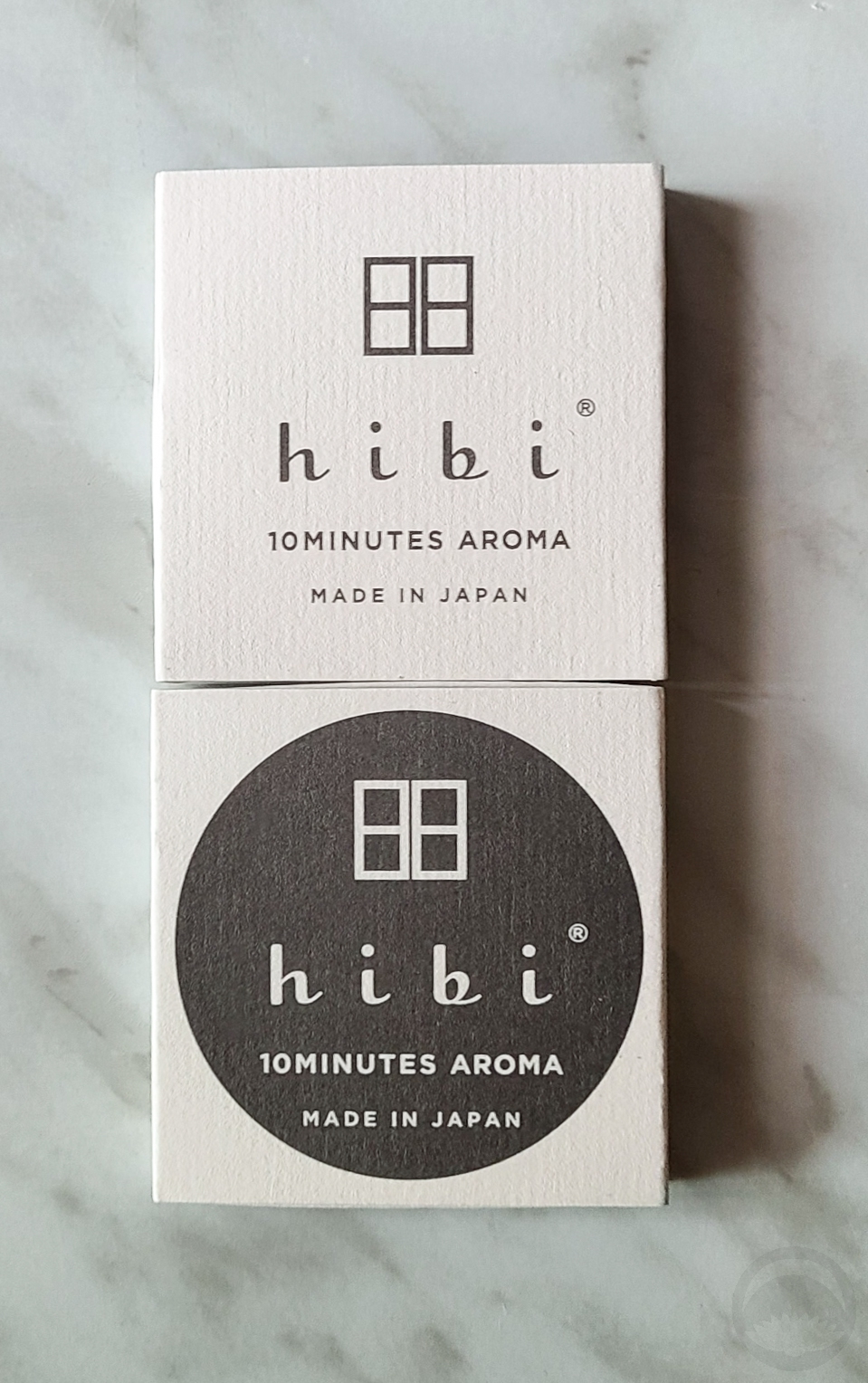
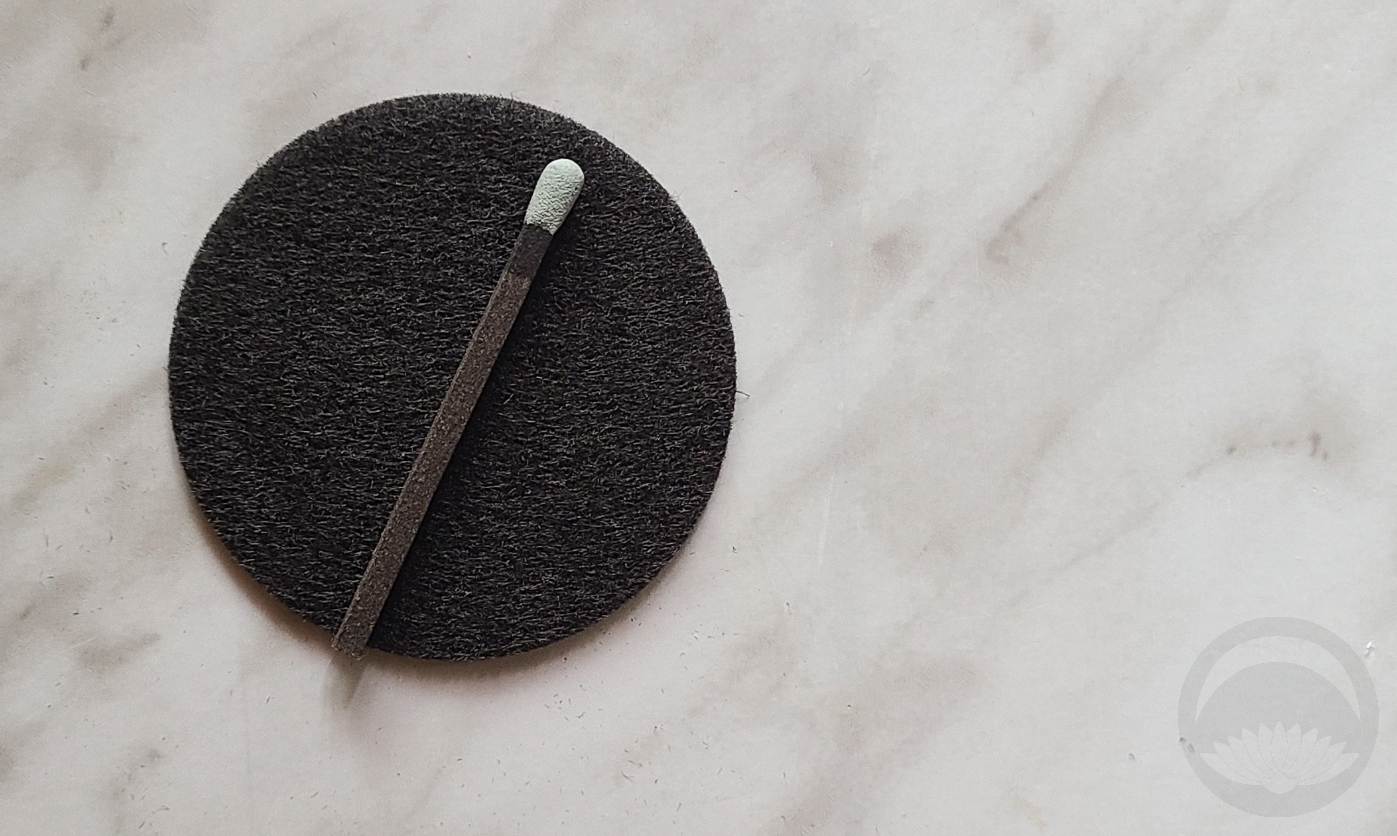
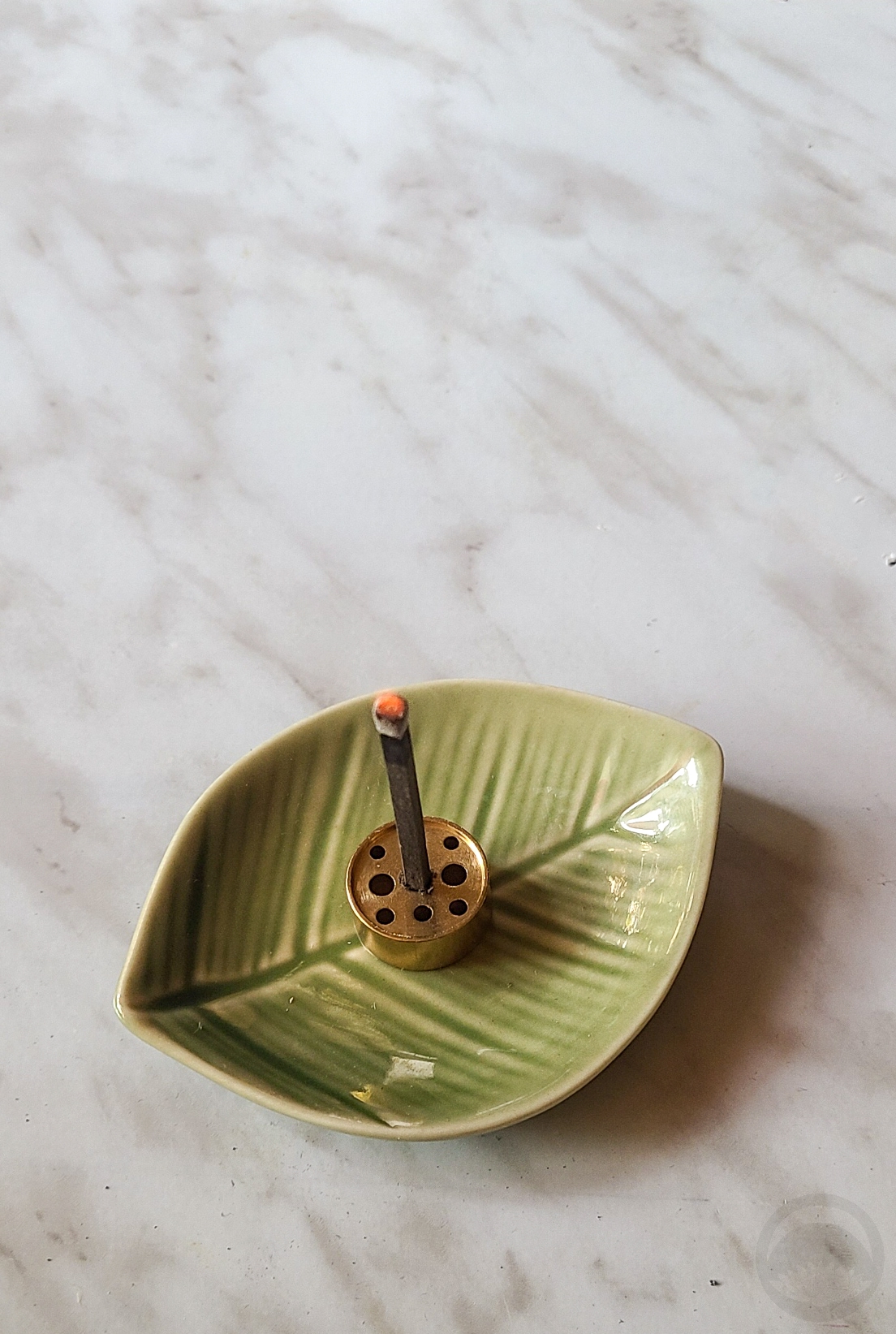
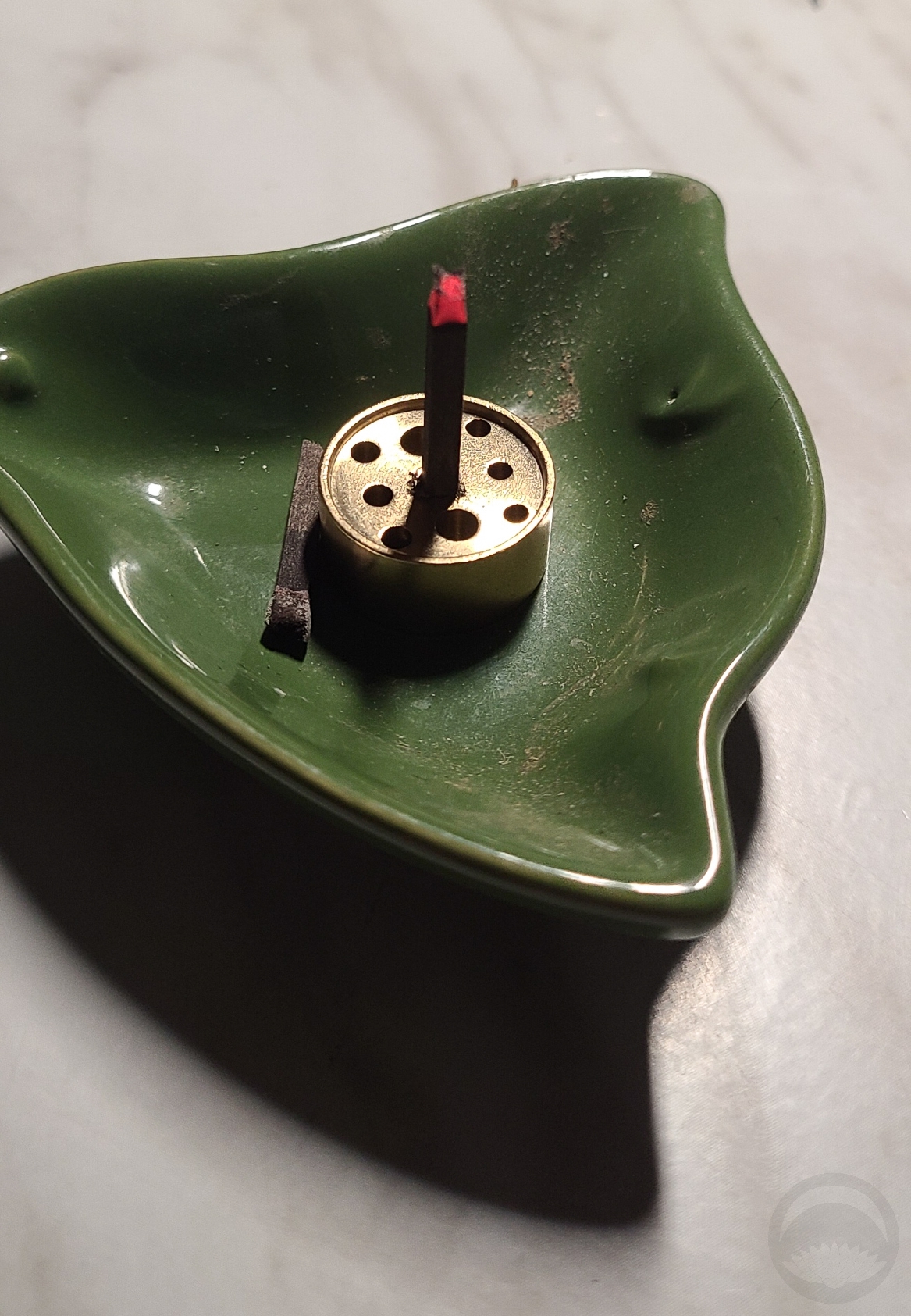
The packaging on these is very thoughtful as well. It’s sleek and minimal, which makes it excellent to throw into a travel bag or hand out as a small hostess or thank-you gift. The sampler comes with a burn-proof mat you can rest your Hibi match on as it burns. I have used mine multiple times and it’s still absolutely solid and safe. However, you can also put them into any ceramic or burn-proof dish or carefully wiggle them into a small incense holder. Mine are meant for thinner sticks but with some gentle persuasion they can be slotted into the largest opening on most holders. However, they are fragile (more on that below) so you need to be cautious.

Because these are set to a standard timeframe of ten minutes, they’re an excellent way to take a quick focus or meditative break. They remind me somewhat of an antiquated method of time-keeping, relying on incense clocks. I burnt one at a time on several of my lunch breaks during the particularly hectic holiday rush, and it was a lovely way to both escape and ground myself for the afternoon rush.

As I mentioned earlier, the only negative I can find about Hibi 10Minutes Aroma is that since the entire stick is incense, it is a bit more fragile than a regular match would be. If you strike them too hard there is a chance of them snapping. Personally, I find it easier to light the “match” head with an external source like a long-handled candle lighter but if you find yourself without one you can definitely make them work just by being gentle.

You can find Hibi 10Minutes Aroma on their own website, as well as at many smaller local specialty retailers, especially Japanese lifestyle stores or fine home goods shops. If these options are not accessible for you, they are also available on Amazon.

 I purchased this item at a discounted price for honest review purposes. If you have a topically appropriate craft, product, or service you would like me to review, please contact me.This post contains affiliate link(s). If you choose to purchase, I receive a small rebate or commission which goes to the continued maintenance of this site.